Celebrity Car Blog
Get cars information cars shows and autos news cars reviews and expert advice from Celebrity Cars Blog


Thai automakers hope year-end auto show will boost sagging sales

Monday, December 04, 2006
by Nareerat Wiriyapong, December 3, 2006

BANGKOK (AFP) - Bangkok's Motor Expo, often overlooked as the smaller of Thailand's two auto shows, has won unusual attention this year as carmakers pin to it their hopes of a last-minute jolt to a year of lagging sales.

This year is set to be the first year of falling auto sales since the 1997 financial crisis blew apart the market.

As of October, sales were down four percent over the same period last year and the industry doesn't expect them to leave negative territory by the year-end.

But that hasn't stopped them from hoping that the Motor Expo will be the catalyst that helps them shake off pressure from a year of high oil prices, rising interest rates, widespread flooding and intense political turmoil.

"The Motor Expo will give a significant boost to car sales for the rest of the year. This is high season and people are in the mood for spending," said Wit Sittivaekin, marketing director of BMW group in Thailand.

"A lot of uncertainties have influenced the market, especially oil prices and political uncertainties. The situation has improved gradually," he told AFP.

"Even so, consumers still have purchasing power and are ready to spend money for the right product and financial offers," he added.

Carmakers are offering aggressive promotions and unveiling new models for 2007 to draw customers to the Expo, which opened on November 30 and runs through December 11.

Last year, 15,000 cars were sold at the auto show, which attracted 1.6 million visitors, according to organiser Inter-Media Consultant Co.

But the show was not expected to do well enough to turnaround a disappointing 2006 after a series of record-setting years.

In October, the month after the coup that ousted prime minister Thaksin Shinwatra, sales plummeted by 10.5 percent from one year earlier, according to figures complied by Toyota Motor Thailand.

The Automotive Industry Club said sales overall were expected to sink for the year.

"It would be the first negative growth year-on-year in car sales since the sector recovered from the crisis with double-digit increases every year," said the club's spokesman Suraphong Phaisithpattanaphong.

Domestic sales this year are expected to fall short of the record 703,000 units sold in 2005 with commercial vehicles suffering the most, Suraphong said.

Manufacturers have also revised down their production target by 450,000 units for 2006 to 1.2 million units, he added.

Last year total production stood at 1.1 million units.

"Despite the auto show, volume for 2006 still cannot catch up with those of last year, after sales were sluggish for many months," Suraphong told AFP.

Analysts said slow domestic consumption has put Thailand's economic growth among the slowest in east Asia since 2005, pushing car sales down.

"Even though consumer confidence improved after the coup, other negative factors have remained, mainly the oil prices," said Sakkarin Nigamsilpa, an auto analyst at Kasikorn Research Center.

"With improving confidence and an expected decrease in interest rates, we expect domestic car sales will begin growing again early next year," he told AFP.

Despite the weak domestic demand, Thailand's auto exports have continued to surge. Automakers expect to finish the year with exports up 30 percent from 2005, topping 500,000 units for the first time.

Suraphong said manufacturers are still confident that the sector could achieve another milestone in 2010 with production volume of 1.8 million units.

But Kasikorn's Sakkarin said Thailand has to find other niches to reach the target as its core pick-up truck segment, which accounts for two thirds of local production, is getting saturated.

Thailand is now the world's largest producer of pickups, surpassing the United States.

The Board of Investment earlier this month announced standards for producing fuel-efficient cars that would receive yet-undefined incentives from the government for local production.

Thailand wants to convince automakers to begin producing cars that would meet stringent Euro 4 emission standards and consume less than five liters of petrol per 100 kilometers (62 miles).

Shortly after the announcement, Japan's Mazda Corp and Ford Motor announced plans to spend more than 50 billion yen (424 million dollars) combined to build a small car factory in Thailand, set to open in 2009.

Add to blogmarks delicious digg furl google netvouz newsvine reddit spurl Technorati


Nederlands/Dutch Français/French Русский/Russian Deutsch/German Italiano/Italian Português/Portuguese Español/Spanish Ελληνικά/Greek 日本語/Japanese 한국어/Korean 中文(简体)/Chinese Simplified 中文(简体)/Chinese Traditional
4:31 AM :: 1 comments ::

janangel :: permalink


Most reliable Pickups

Sunday, November 26, 2006

Most reliable (Best score first)


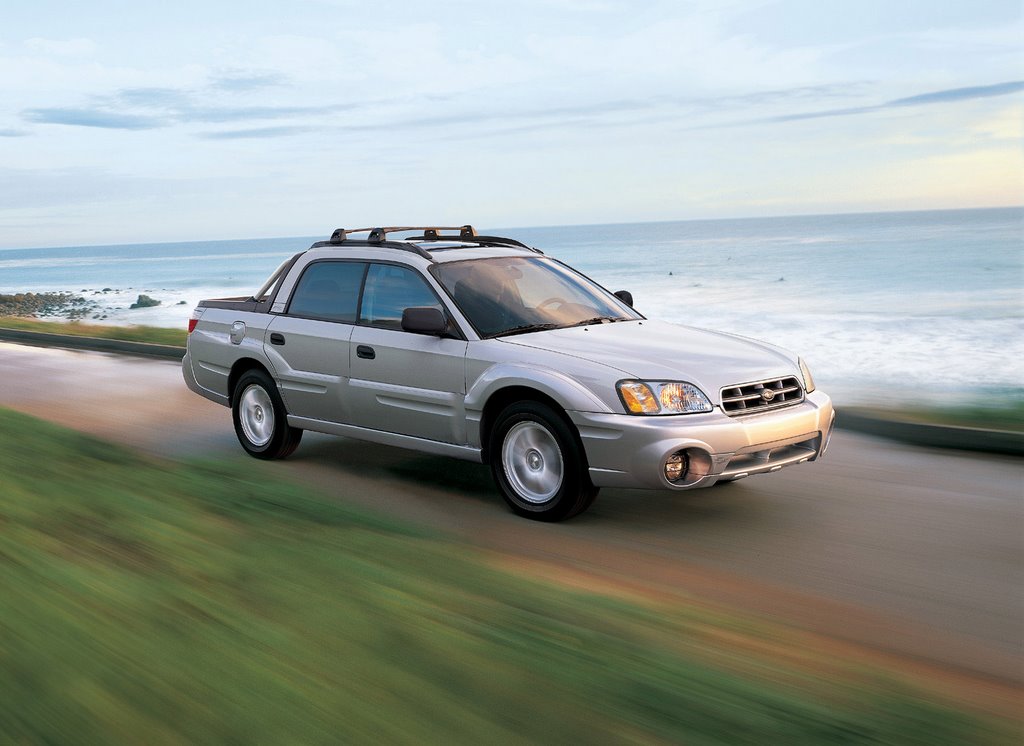
Subaru Baja

Toyota Tundra

Toyota Tacoma

Nissan Frontier (V6)


Least reliable (Worst score first)


Chevrolet Cobalt

2006 Nissan Sentra

Volkswagen Jetta (5 cyl.)

Chevrolet Aveo


2007 models unless otherwise noted.
*Predicted reliability based on only one model year.

Source: money.cnn.com

Add to blogmarks delicious digg furl google netvouz newsvine reddit spurl Technorati


Nederlands/Dutch Français/French Русский/Russian Deutsch/German Italiano/Italian Português/Portuguese Español/Spanish Ελληνικά/Greek 日本語/Japanese 한국어/Korean 中文(简体)/Chinese Simplified 中文(简体)/Chinese Traditional
3:52 AM :: 0 comments ::

janangel :: permalink


Most reliable Large SUVs


Most reliable (Best score first)


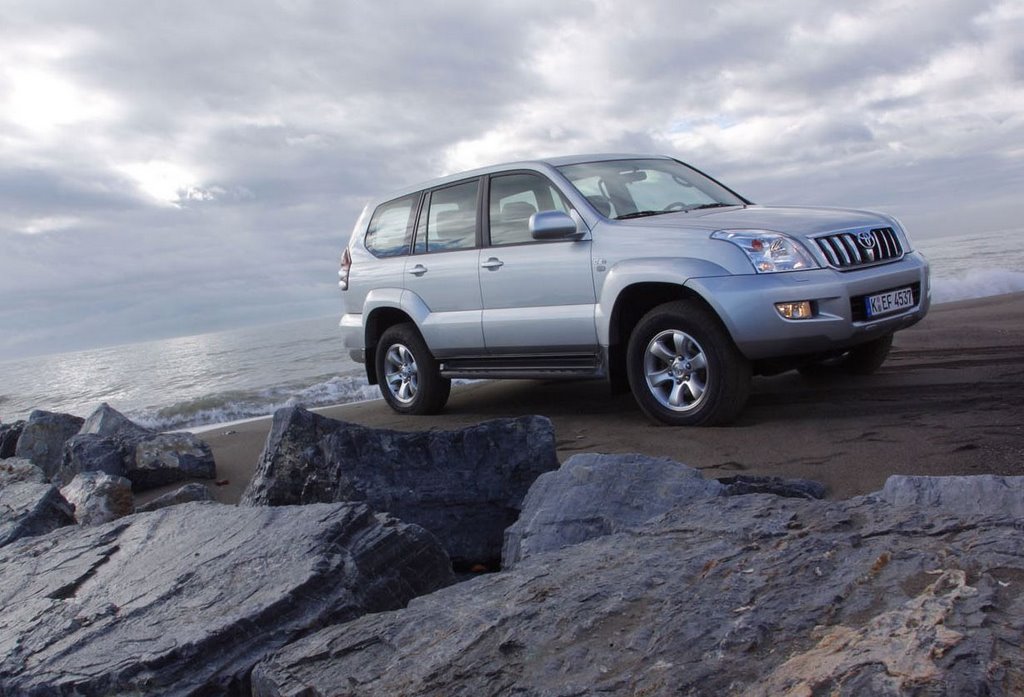
Toyota Land Cruiser

Lexus LX

Toyota Sequoia

Chevrolet Tahoe*

GMC Yukon*


Least reliable (Worst score first)


Nissan Armada

Infiniti QX56

Lincoln Navigator

Hummer H2


2007 models unless otherwise noted.
*Predicted reliability based on only one model year.

Source: money.cnn.com

Add to blogmarks delicious digg furl google netvouz newsvine reddit spurl Technorati


Nederlands/Dutch Français/French Русский/Russian Deutsch/German Italiano/Italian Português/Portuguese Español/Spanish Ελληνικά/Greek 日本語/Japanese 한국어/Korean 中文(简体)/Chinese Simplified 中文(简体)/Chinese Traditional
3:44 AM :: 0 comments ::

janangel :: permalink


Most Reliable Small SUV


Most reliable (Best score first)


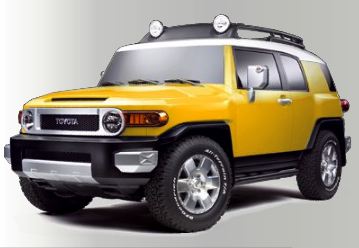
Toyota FJ Cruiser

Honda Element

2006 Honda CR-V

Toyota Rav4*

2006 Mitsubishi Outlander*

Subaru Forester


Least reliable (Worst score first)


Kia Sportage

2007 models unless otherwise noted.
*Predicted reliability based on only one model year.

Source: money.cnn.com

Add to blogmarks delicious digg furl google netvouz newsvine reddit spurl Technorati


Nederlands/Dutch Français/French Русский/Russian Deutsch/German Italiano/Italian Português/Portuguese Español/Spanish Ελληνικά/Greek 日本語/Japanese 한국어/Korean 中文(简体)/Chinese Simplified 中文(简体)/Chinese Traditional
3:12 AM :: 0 comments ::

janangel :: permalink


Most reliable Midsized SUVs


Most reliable (Best score first)


Toyota Highlander Hybrid*

Toyota 4Runner

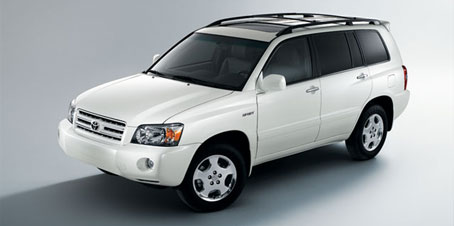
Toyota Highlander

Honda Pilot

Lexus RX400h* (hybrid)

2006 Acura MDX


Least reliable (Worst score first)


Mercedes-Benz M-class*

Land Rover LR3 (V8)

Cadillac SRX (V8)

Mercedes-Benz R-class*

Volkswagen Touareg

Jeep Grand Cherokee

Hummer H3*

2006 BMW X5 (V8)

Volvo XC90 (I6 and V8)

Ford Explorer (V8)

Mercury Mountaineer (V8)


2007 models unless otherwise noted.
*Predicted reliability based on only one model year.

Source: money.cnn.com

Add to blogmarks delicious digg furl google netvouz newsvine reddit spurl Technorati


Nederlands/Dutch Français/French Русский/Russian Deutsch/German Italiano/Italian Português/Portuguese Español/Spanish Ελληνικά/Greek 日本語/Japanese 한국어/Korean 中文(简体)/Chinese Simplified 中文(简体)/Chinese Traditional
3:11 AM :: 0 comments ::

janangel :: permalink


Most Reliable Wagon/Minivan


Most reliable (Best score first)


Pontiac Vibe

Scion xB

Toyota Matrix

Toyota Sienna


Least reliable (Worst score first)


Buick Terraza

Chevrolet Uplander

Saturn Relay

Nissan Quest


2007 models unless otherwise noted.
*Predicted reliability based on only one model year.

Source: money.cnn.com

Add to blogmarks delicious digg furl google netvouz newsvine reddit spurl Technorati


Nederlands/Dutch Français/French Русский/Russian Deutsch/German Italiano/Italian Português/Portuguese Español/Spanish Ελληνικά/Greek 日本語/Japanese 한국어/Korean 中文(简体)/Chinese Simplified 中文(简体)/Chinese Traditional
3:04 AM :: 0 comments ::

janangel :: permalink


Most Reliable Sport/Sporty car


Most reliable (Best score first)


Lexus SC

Toyota Camry Solara (4-cyl.)

Subaru Impreza WRX

Honda S2000

Mitsubishi Eclipse*

2006 Mini Cooper hatchback


Least reliable (Worst score first)


Pontiac Solstice*

Mercedes-Benz SL

Mercedes-Benz CLK

Mercedes-Benz SLK (V6)

Chevrolet Corvette

Porsche 911 Carrera

Ford Mustang (V6)


2007 models unless otherwise noted.
*Predicted reliability based on only one model year.

Source: money.cnn.com

Add to blogmarks delicious digg furl google netvouz newsvine reddit spurl Technorati


Nederlands/Dutch Français/French Русский/Russian Deutsch/German Italiano/Italian Português/Portuguese Español/Spanish Ελληνικά/Greek 日本語/Japanese 한국어/Korean 中文(简体)/Chinese Simplified 中文(简体)/Chinese Traditional
2:59 AM :: 0 comments ::

janangel :: permalink


Most Reliable Luxury Car


Most reliable (Best score first)


2006 Lexus LS

Infiniti M*


Least reliable (Worst score first)


Cadillac STS (V8)

2006 Mercees-Benz S-class

Mercedes-Benz CLS*

Mercedes-Benz E-class sedan

BMW 7-series

Jaguar S-type


2007 models unless otherwise noted.
*Predicted reliability based on only one model year.

Source: money.cnn.com

Add to blogmarks delicious digg furl google netvouz newsvine reddit spurl Technorati


Nederlands/Dutch Français/French Русский/Russian Deutsch/German Italiano/Italian Português/Portuguese Español/Spanish Ελληνικά/Greek 日本語/Japanese 한국어/Korean 中文(简体)/Chinese Simplified 中文(简体)/Chinese Traditional
2:46 AM :: 1 comments ::

janangel :: permalink


Most Reliable Upscale/Large Car


Most reliable (Best score first)


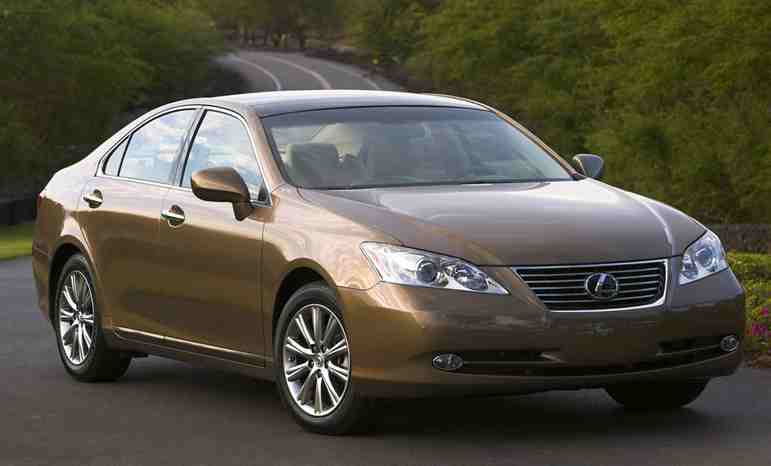
Lexus ES350

Lincoln Zephyr*

Hyundai Azera*

Acura TSX

Acura TL


Least reliable (Worst score first)


Jaguar X-type

Chrysler 300 (V8)

Saab 9-3


2007 models unless otherwise noted.
*Predicted reliability based on only one model year.

Source: money.cnn.com

Add to blogmarks delicious digg furl google netvouz newsvine reddit spurl Technorati


Nederlands/Dutch Français/French Русский/Russian Deutsch/German Italiano/Italian Português/Portuguese Español/Spanish Ελληνικά/Greek 日本語/Japanese 한국어/Korean 中文(简体)/Chinese Simplified 中文(简体)/Chinese Traditional
2:45 AM :: 0 comments ::

janangel :: permalink


Most Reliable Family Car


Most reliable (Best score first)


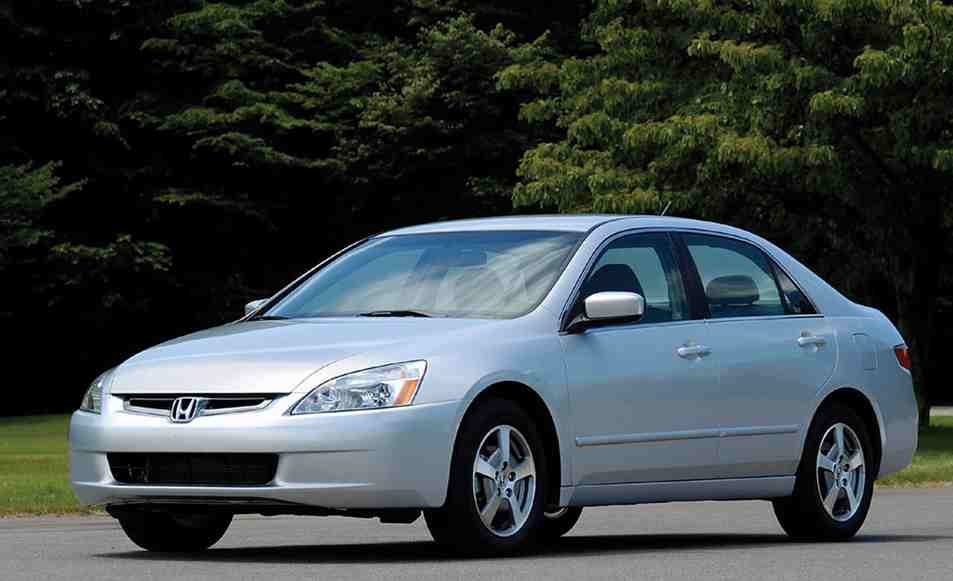
Honda Accord Hybrid

Toyota Prius

Honda Accord (4-cyl.)

Ford Fusion*

Mercury Milan*


Least reliable (Worst score first)


Volkswagen Passat (4 cyl.)*

2007 models unless otherwise noted.
*Predicted reliability based on only one model year.

Source: money.cnn.com

Add to blogmarks delicious digg furl google netvouz newsvine reddit spurl Technorati


Nederlands/Dutch Français/French Русский/Russian Deutsch/German Italiano/Italian Português/Portuguese Español/Spanish Ελληνικά/Greek 日本語/Japanese 한국어/Korean 中文(简体)/Chinese Simplified 中文(简体)/Chinese Traditional
2:22 AM :: 0 comments ::

janangel :: permalink


Most Reliable Small Car


Most reliable (Best score first)


Subaru Baja

Toyota Tundra

Toyota Tacoma

Nissan Frontier (V6)


Least reliable (Worst score first)


Nissan Titan

Ford F-250 (diesel)

Dodge Dakota (4WD)

2006 Cadillac Escalade EXT


2007 models unless otherwise noted.
*Predicted reliability based on only one model year.

Source: money.cnn.com

Add to blogmarks delicious digg furl google netvouz newsvine reddit spurl Technorati


Nederlands/Dutch Français/French Русский/Russian Deutsch/German Italiano/Italian Português/Portuguese Español/Spanish Ελληνικά/Greek 日本語/Japanese 한국어/Korean 中文(简体)/Chinese Simplified 中文(简体)/Chinese Traditional
2:18 AM :: 0 comments ::

janangel :: permalink


13 safest cars for 2007


13 safest cars for 2007


1. Acura RDX

2. Audi A4

3. Audi A6

4. Honda CR-V

5. Honda Pilot

6. Hyundai Entourage

7. Kia Sedona

8. Mercedes-Benz M-class

9. Saab 9-3

10. Subaru B9 Tribeca

11. Subaru Forester

12. Subaru Legacy

13. Volvo XC90


Source: money.cnn.com

Add to blogmarks delicious digg furl google netvouz newsvine reddit spurl Technorati


Nederlands/Dutch Français/French Русский/Russian Deutsch/German Italiano/Italian Português/Portuguese Español/Spanish Ελληνικά/Greek 日本語/Japanese 한국어/Korean 中文(简体)/Chinese Simplified 中文(简体)/Chinese Traditional
1:03 AM :: 0 comments ::

janangel :: permalink


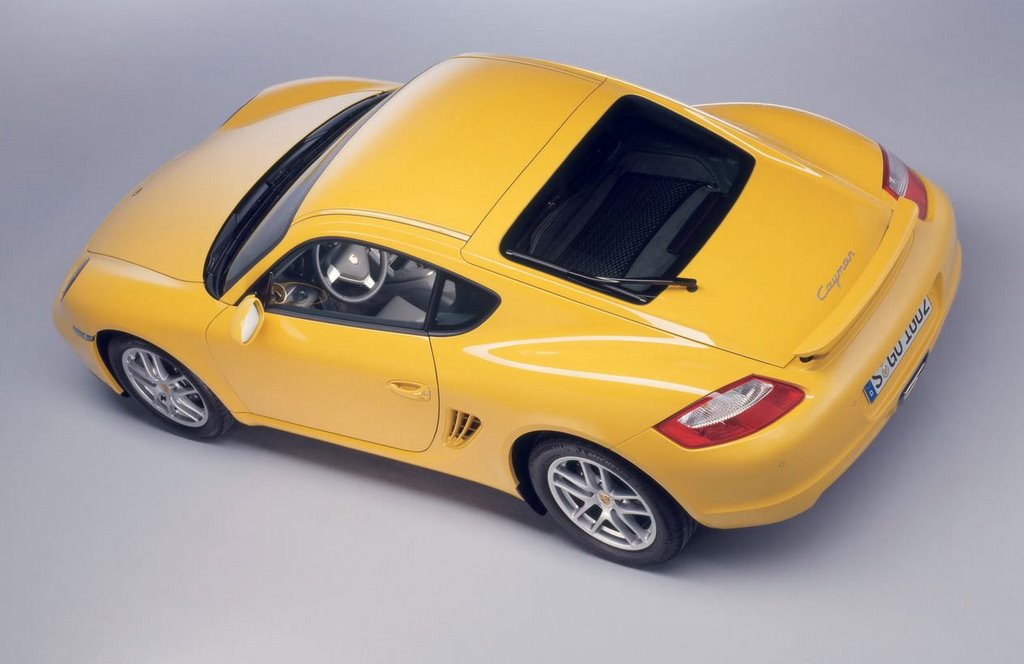
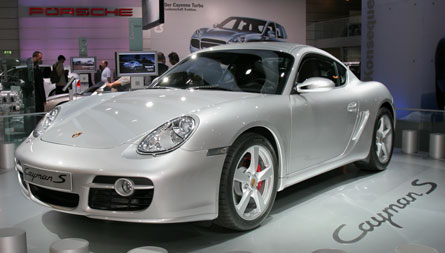
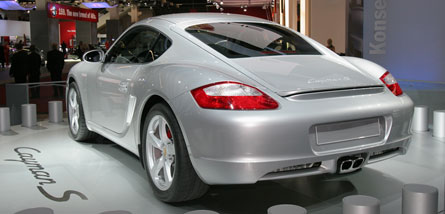
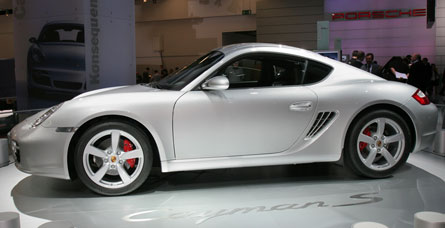
First Drive: 2007 Porsche Cayman Reviews

Thursday, November 23, 2006


2007 Porsche Cayman


The Porsche's new base-model Cayman may be just what you're looking for.

Want to save 10,000 bucks and a couple of gallons of gas? Then Porsche's new base-model Cayman may be just what you're looking for. Representing Zuffenhausen's latest attempt to appeal to the bargain-conscious Porsche buyer (how's that for an oxymoron?), the latest Boxster-based coupe, called simply Cayman, is a pared-down version of the Cayman S, which was introduced at last year's Frankfurt auto show.


Pass one on the street and you're not likely to notice the difference. The visual clues are subtle and include unique 5-spoke, 17-in.-diameter alloy wheels, distinctive center exhaust tip, titanium-color Cayman badge, black (versus red) brake calipers, and a black front spoiler lip. Peek inside and you'll find an interior that's set off by a body-color, mid-dash accent stripe and body-color rear storage compartment covers plus black-faced instruments with gray trim rings. And — provided the car's not equipped with the optional 6-speed manual or 5-speed Tiptronic S automatic — a shift knob with a 5-speed pattern.


Slip behind the wheel and take 'er for a spin and you'll notice another, not so subtle, difference: performance. Although nearly identical to the S powerplant externally, the “normal” Cayman engine displaces 2687 cc (down from 3387) by virtue of an 85.5-mm (versus 96.0 mm) bore. Because it's smaller and thus not as highly stressed, the new engine sports a lighter crankshaft, pistons and piston pins, and weighs a tad less than the S's. Also, the compression ratio has been raised to 11.3:1 to maximize horsepower and torque and to improve fuel economy while reducing emissions.


At full tilt, the new VarioCam Plus-equipped 2.7-liter flat-6 develops 245 bhp at 6500 rpm and churns out 201 lb.-ft. of torque at anywhere from 4600 to 6000 rpm. Coupled to a standard- equipment, Volkswagen-built 5-speed with lower 1st- and 2nd-gear ratios, the base Cayman scoots from 0 to 100 km/h (62 mph) in 6.1 seconds, about three- tenths of a second more than the 295-horsepower S. Top speed is down too: from 171 mph for the S to 160 mph (161 for the 6-speed equipped Cayman).


As a further cost- and weight-saving measure, the 2865-lb. Cayman is fitted with smaller front brakes with monobloc 4-piston calipers. Cross-drilled and axially vented, the rotors measure 11.7 in. up front and 11.8 in. at the rear and don't seriously affect the car's stopping ability, despite their reduced size.


Wending our way through the Taunus mountains outside of Frankfurt, Germany, we found that while the base Cayman may not be the quickest Kinder on the Strasse, it maintains Porsche's tradition for impressive handling, thanks to its dedicated, standard-equipment 17-in. alloys (6.5-in. front, 8.0-in. rear) shod with 205/55-17 front and 235/50-17 rear tires. Although the suspension has been softened somewhat (reduced spring and shock absorber rates and smaller front and rear anti-roll bars) for a more compliant ride, lateral performance is not compromised significantly. Because of its mid-engine design and rigid construction, even the base Cayman sports crisp handling. And for those who must up the lateral acceleration ante, optional 18- and 19-inchers are available.Speaking of handling, the Cayman is enhanced by Porsche Stability Management (PSM), standard equipment (along with air conditioning and an AM/FM/CD) on the entry-level coupe. Incorporating ABS, ASR (anti-spin control), MSR (engine drag force control) and ABD (automatic brake differential), PSM can be deactivated with the flip of a switch. However, the system will reactivate itself if the brake pedal pressure reaches the point of ABS intervention.


At $49,400, the Cayman, which dishes out a smaller dose of the performance, handling and luxury found in the S, is targeted at the budget-conscious or first-time Porsche buyer who'll be content to merely motor along in this slick-looking, mid-engine coupe. Unfortunately, some may choose to pack their base Cayman with every nicety in Zuffenhausen's option book. My advice to them: Buy a Cayman S or leave well enough alone (and the $10,000 in your bank account).

Review by By Joe Rusz at Road and Track

Add to blogmarks delicious digg furl google netvouz newsvine reddit spurl Technorati


Nederlands/Dutch Français/French Русский/Russian Deutsch/German Italiano/Italian Português/Portuguese Español/Spanish Ελληνικά/Greek 日本語/Japanese 한국어/Korean 中文(简体)/Chinese Simplified 中文(简体)/Chinese Traditional
5:22 AM :: 0 comments ::

janangel :: permalink


Top 10 Sports Cars on MSN Autos

The list of the ten most popular sports cars on MSN Autos is based on visits to the site's vehicle research pages during July through September of 2006.


1. Ford Mustang

2. Chevrolet Corvette

3. Saturn Sky

4. Lamborghini Murcielago

5. Mitsubishi Eclipse

6. Nissan 350Z

7. Porsche 911

8. Pontiac Solstice

9. Ferrari F430

10. Aston Martin V12 Vanquish

Add to blogmarks delicious digg furl google netvouz newsvine reddit spurl Technorati


Nederlands/Dutch Français/French Русский/Russian Deutsch/German Italiano/Italian Português/Portuguese Español/Spanish Ελληνικά/Greek 日本語/Japanese 한국어/Korean 中文(简体)/Chinese Simplified 中文(简体)/Chinese Traditional
4:40 AM :: 0 comments ::

janangel :: permalink


Lowest Theft Claim Rate for 2003-2005 model year vehicles


1. Ford Taurus

2. Pontiac Vibe 4WD

3. Buick LeSabre

4. Buick Park Avenue

5. Toyota Sienna 4WD

Add to blogmarks delicious digg furl google netvouz newsvine reddit spurl Technorati


Nederlands/Dutch Français/French Русский/Russian Deutsch/German Italiano/Italian Português/Portuguese Español/Spanish Ελληνικά/Greek 日本語/Japanese 한국어/Korean 中文(简体)/Chinese Simplified 中文(简体)/Chinese Traditional
4:37 AM :: 0 comments ::

janangel :: permalink


Highest Theft Claim Rate for 2003-2005 model year vehicles


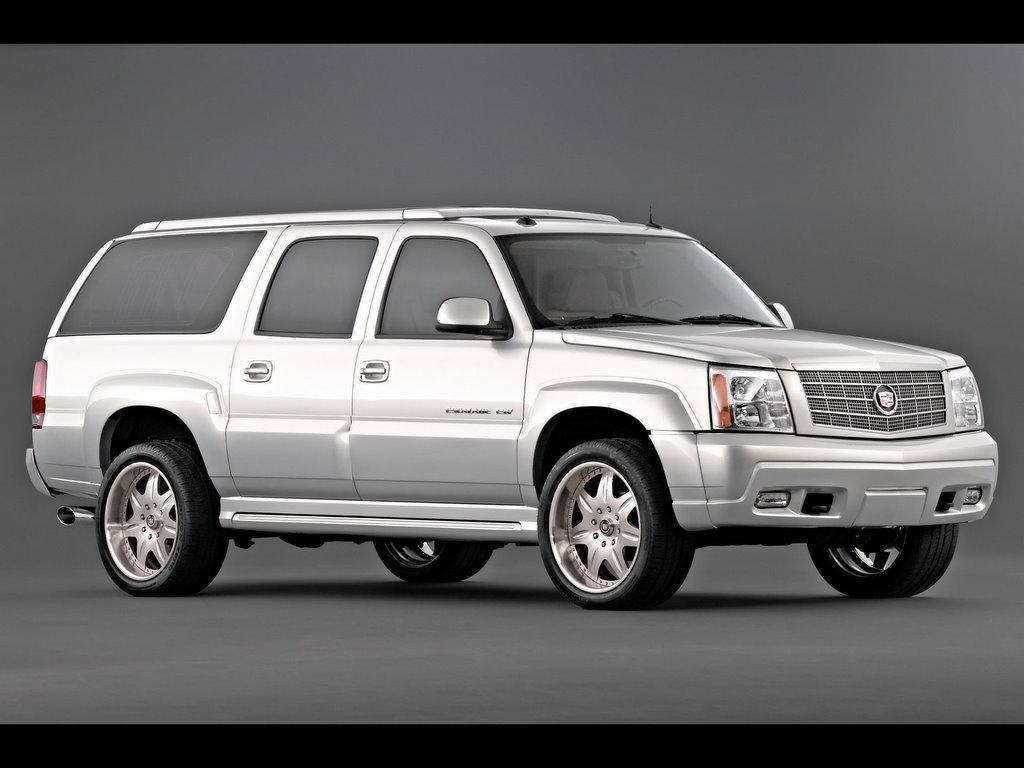
1. Cadillac Escalade

2. Mitsubishi Lancer Evolution

3. Dodge Ram 1500 Quad Cab

4. Ford F-250 SuperCrew 4WD/Ford F-350 SuperCrew 4WD

5. Chrysler Sebring

Add to blogmarks delicious digg furl google netvouz newsvine reddit spurl Technorati


Nederlands/Dutch Français/French Русский/Russian Deutsch/German Italiano/Italian Português/Portuguese Español/Spanish Ελληνικά/Greek 日本語/Japanese 한국어/Korean 中文(简体)/Chinese Simplified 中文(简体)/Chinese Traditional
4:33 AM :: 0 comments ::

janangel :: permalink


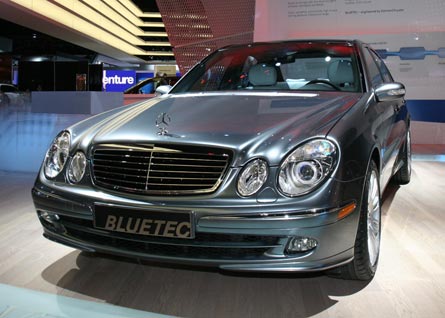
First Drive: 2007 Mercedes-Benz E320 Bluetec Reviews


First Drive: 2007 Mercedes-Benz E320 Bluetec


This new 3.0-liter V-6 is intercooled and turbocharged.


Mercy sakes alive, looks like we got us a convoy. Not of cab-over Petes and Kenworths haulin' logs, but a procession of Mercedes-Benz diesels strung out across the American Southwest. Near Las Vegas, more precisely, where Mercedes-Benz was holding the introduction of its E320 Bluetec luxury sedan.


Curiously, nowhere in this car's designation does the word "diesel" appear, because when it comes to unloading the baggage associated with these compression-ignition engines, Mercedes is as eager as the head bellhop at the Ritz-Carlton.


"Diesels are smelly, they clatter incessantly, are slow and belch soot," critics are wont to say. Let's take these accusations one by one and see how this new Benz fares.


Well, diesel fuel itself is stinky and oily, especially when you spill some on your pants or shoes and it wafts through the cabin. Yet what comes out of the E320 Bluetec's tailpipe is not the least bit objectionable.


Noise? On cold start, there's a faraway clatter for the first few seconds. After that, you'd be hard-pressed to tell it's a diesel with the windows up and, say, the ventilation fan blowing on its low setting. And ultra-quick piezoelectric injectors spritz what Mercedes calls a pilot charge into the combustion chambers milliseconds before the main dose of fuel, smoothing out pressure and temperature spikes and reducing the "marbles in a coffee can" sound so beloved by UPS drivers.


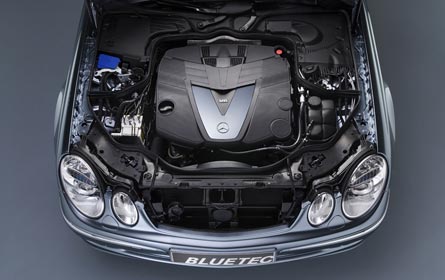
Slow? Hardly. This new 3.0-liter V-6 (despite what the E320 designation might have you believe) is intercooled and turbocharged, with the exhaust-stream hamster wheel made more responsive with a variable-vane arrangement similar to what's used on the Porsche 911 Turbo. This steel-sleeved, aluminum-block engine makes 208 bhp and an axle-twisting 388 lb.-ft. of torque-the last stat nearly matching Mercedes' 5.5-liter gasoline V-8-on tap from 1600 to 2400 rpm.


Mercedes isn't offering acceleration numbers, but we'd guess that 0-60 times are in the high 6-second range. All that torque is applied through a 7-speed automatic with Touch Shift sequential shift ability. Significantly lighter and more compact than the cast-iron-block inline-6 it replaces, the Bluetec diesel can (and does, at least in Europe) power everything from a C-Class sedan to a Jeep Grand Cherokee. As sooty as a chimney sweep? Not a chance, benzene-breath. The Bluetec's exhaust has to pass through a phalanx of devices: an oxidation catalytic converter snugged up against the turbo's exit, the NOX storage catalyst, a ceramic particulate filter, and a third converter near the tailpipe. The particulate filter is especially interesting, as it periodically undergoes what's analogous to a self-cleaning oven cycle as it becomes clogged with soot. On cue from the engine-management computer, extra fuel is injected, dumping more unburned hydrocarbons into the first converter to increase heat; also, the timing of injections is retarded. Both result in the exhaust temperature briefly hitting 650 degrees Celsius (more than 1200 degrees Fahrenheit), enough to burn off the soot and clean the filter.


Although EPA figures are not finalized, the E320 Bluetec achieves roughly 27 mpg city, and 36 mpg highway, for a combined number of 30 or 31. Consider its 21.0-gal. tank and you've got an Interstate cruising range of more than 700 miles. Better yet, the $52,325 Bluetec is just $1000 dearer than its equivalently equipped E320 gasoline counterpart, so it's possible to amortize that additional cost with fuel savings over two years or so. Do the math with many popular hybrids, and the time frame can be multiple decades, far longer than most people keep a car.


2007 Mercedes-Benz E320 Blutec So what's the downside? Well, it accelerates nicely, but the throttle response seems a little muddy, with a lot of pedal travel required to get the desired result. Right now, the Bluetec is a 45-state car, but when the EPA decides on the particulars of urea injection-which cuts NOX production even further-it will meet the more stringent regulations of the Californias and New Yorks of the world. Diesel fuel still can't be found at every filling station…but the optional nav system will point you to the nearest pump with the required LSD (Low Sulfur Diesel), which has been on sale since October 15, 2006. Just goes to show that "diesel" is not a four-letter word…it's six at last count.


Review by Douglas Kott at Road and Track

Add to blogmarks delicious digg furl google netvouz newsvine reddit spurl Technorati


Nederlands/Dutch Français/French Русский/Russian Deutsch/German Italiano/Italian Português/Portuguese Español/Spanish Ελληνικά/Greek 日本語/Japanese 한국어/Korean 中文(简体)/Chinese Simplified 中文(简体)/Chinese Traditional
4:00 AM :: 0 comments ::

janangel :: permalink


Top ten bestsellers Cars in America for the first nine months of 2006, based on data published by Automotive News.

1. Ford F-Series 616,785

2. Chevrolet Silverado 486,901

3. Toyota Camry 340,905

4. Honda Accord 278,422

5. Dodge Ram 275,225

6. Honda Civic 251,543

7. Chevrolet Impala 219,167

8. Toyota Corolla 216,934

9. Chevrolet Cobalt 178,558

10. Nissan Altima 174,661

Source: Automotive News Data Center

Add to blogmarks delicious digg furl google netvouz newsvine reddit spurl Technorati


Nederlands/Dutch Français/French Русский/Russian Deutsch/German Italiano/Italian Português/Portuguese Español/Spanish Ελληνικά/Greek 日本語/Japanese 한국어/Korean 中文(简体)/Chinese Simplified 中文(简体)/Chinese Traditional
3:54 AM :: 0 comments ::

janangel :: permalink


Top 10 fuel-efficient vehicles for 2007, based on EPA fuel economy data for city driving (City/Hwy)

1. Toyota Prius 60/51 mpg

2. Honda Civic Hybrid 49/51 mpg

3. Toyota Camry Hybrid 40/38 mpg

4. Ford Escape Hybrid FWD 36/31 mpg

5. Toyota Yaris (manual) 34/40 mpg

6. Toyota Yaris (automatic) 34/39 mpg

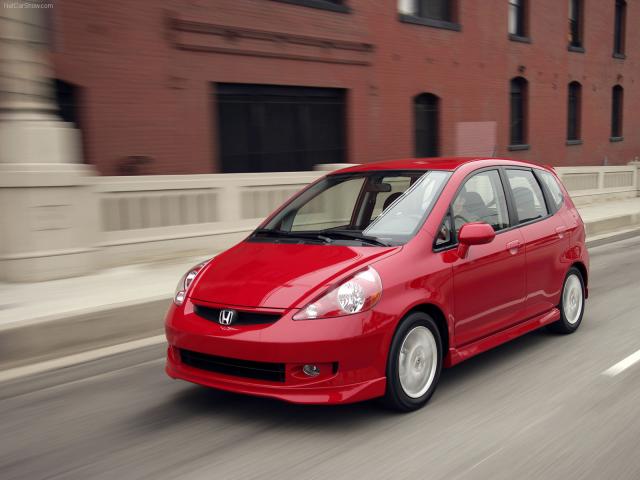
7. Honda Fit (manual) 33/38 mpg

8. Toyota Corolla 32/41 mpg

9. Hyundai Accent (manual) (tie)

Kia Rio 32/35 mpg

10. Ford Escape Hybrid AWD

Mercury Mariner Hybrid AWD 32/29 mpg

Source: autos.msn.com

Add to blogmarks delicious digg furl google netvouz newsvine reddit spurl Technorati


Nederlands/Dutch Français/French Русский/Russian Deutsch/German Italiano/Italian Português/Portuguese Español/Spanish Ελληνικά/Greek 日本語/Japanese 한국어/Korean 中文(简体)/Chinese Simplified 中文(简体)/Chinese Traditional
3:38 AM :: 0 comments ::

janangel :: permalink


Alternative Fuel Vehicles - Types and possibilities?

What are the different types of alternative fuel availible for cars? Can (or Will) any of them be applied practically in the near future? Cheers


There are many alternative fuel vehicles. Some are on the market today, others are simply concepts. I'll give a quick rundown of the more popular ones:


1. Flex-fuel vehicles - More than 20% of cars on the road today are flex-fuel capable, which means that they are capable of burning a fuel known as E85. E85 is 85% ethanol (which is an alcohol made from corn) and denatured with 15% gasoline.


2. Compressed Natural Gas (CNG) vehicles. There are fleet and government vehicles that will run on compressed natural gas. The engine technology is similar to that of a gasoline engine, with the exception that it has been configured to use natural gas instead of gasoline. Due to the lack of a refueling infrastructure, privately-owned natural gas vehicles are not very common.


3. Liquefied Propane Gas (LPG). This is also a fuel used by fleet vehicles, in particularly trucks. One of the larger users of these vehicles is the Schwan's Foods company, with their big yellow refrigerated delivery trucks. These trucks use LPG as their fuel.


4. Biodiesel. This is a type of diesel fuel that is made from plant or animal fats and oils. It can be used in most diesel engines with little or no modifications. Blends such as B5 (5% biodiesel, 95% petro diesel) and B20 are available, as well as the full 100% biodiesel. Watch for growth in this alternative fuel.


5. Hydrogen. This fuel can be used both in a standard internal combustion engine like those in cars now, or to generate electricity by feeding it to a fuel cell to generate the electricity, which then runs electric motors. The problem right now is storing enough hydrogen onboard to make this a feasible concept, as well as developing a safe way to store it. Most hydrogen-powered vehicles are only concept cars being tested by automakers.


6. Electrical. Electric cars have been in experimentation for many years. The problem is storing a sufficient amount of electrical power on board to make them feasible. If significant advances in battery technology were made, this is a possible concept.

All of these are still in some degree of experimentation. However, E85 and biodiesel are real products are on the market for consumers to use today. As oil prices escalate, these alternative fuels will develop more market appeal.

Add to blogmarks delicious digg furl google netvouz newsvine reddit spurl Technorati


Nederlands/Dutch Français/French Русский/Russian Deutsch/German Italiano/Italian Português/Portuguese Español/Spanish Ελληνικά/Greek 日本語/Japanese 한국어/Korean 中文(简体)/Chinese Simplified 中文(简体)/Chinese Traditional
3:34 AM :: 0 comments ::

janangel :: permalink


If you have a choice to buy a SUV which one would you buy (Range Rover Sport, BMW x5, Porsche Cayenne, ML Benz

helpme ark at yahoo! answers and this is Best Answer from Ryan Sngo

Oh I love comparisons. Here's my perspective of things. All SUVS chug gas and waste a considerable amount of space on the road, BUT I still love them for being so damn hated.

Car #1) Range Rover Spor t: My #2 pick because it is so damn sexy. If you compare this to the normal Range Rover HSE you will never go back. There are however many ups and downs of this car which gives me reason to place it below my #1. The HSE model gives you a decent 300bhp while the Supercharged version gives you a whopping 390bhp in a 4.4L engine as well. The downside is that Land Rover has had very very very many issues with interior quality and overall reliability.

#2 BMW X5 : This car gets my #3 pick because of electrical gremlins and the fact that its made in the good ol' US of A. It is a very sex car and has 3 engine choices; the 3.0, 4.4 and the 4.8IS. The 4.8is gives you 355bhp which is more than enough, the looks are 2nd to the Range Rover.

#3 Porsche Cayenne : This gets my #1 spot ONLY and ONLY if it is the Turbo version. Any other Cayenne is a useless waste of space and money. The reason I voted this the #1 car is because it has been showered with so much love/hate. The car is also damn sexy and comes with 340bhp.

#4 B ML Class : No comment, MB has been plagued with reliabiliy and quality issues since 1999 and hit its worst in 2003. Still no difference to date.

Add to blogmarks delicious digg furl google netvouz newsvine reddit spurl Technorati


Nederlands/Dutch Français/French Русский/Russian Deutsch/German Italiano/Italian Português/Portuguese Español/Spanish Ελληνικά/Greek 日本語/Japanese 한국어/Korean 中文(简体)/Chinese Simplified 中文(简体)/Chinese Traditional
3:24 AM :: 0 comments ::

janangel :: permalink


Camry now comes as a fuel-thrifty gasoline-electric hybrid

This article write by ANN M. JOB


For the first time ever, America's top-selling car, the Toyota Camry, comes as a fuel-thrifty gasoline-electric hybrid.

It's big news for the Camry, which was redesigned, made larger and more powerful for 2007.

The new, 2007 Camry Hybrid looks like a regular four-door, five-passenger Camry sedan.

And with seven standard air bags, including a new, knee air bag to help keep the driver in proper seat position during a frontal crash, the Hybrid gets the same top, five-out-of-five-stars safety rating for front and side crash protection as do all new 2007 Camrys.....


Read more at Seattle Post-Intelligencer

Add to blogmarks delicious digg furl google netvouz newsvine reddit spurl Technorati


Nederlands/Dutch Français/French Русский/Russian Deutsch/German Italiano/Italian Português/Portuguese Español/Spanish Ελληνικά/Greek 日本語/Japanese 한국어/Korean 中文(简体)/Chinese Simplified 中文(简体)/Chinese Traditional
3:12 AM :: 0 comments ::

janangel :: permalink


Top 25 Cars by Green Rating

This is part of Top 100 Cars by Green Rating


1. 2006 Honda Civic Hybrid CVT AT-PZEV w/ Navigation System

2. 2007 Toyota Prius Touring

3. 2007 Honda Civic Hybrid CVT AT-PZEV

4. 2006 Toyota Prius 4-Door Liftback

5. 2006 Honda Civic GX NGV 5-Spd AT [Limited Availability]

6. 2007 Honda Civic GX NGV 5-Spd AT [Limited Availability]

7. 2006 Honda Insight CVT w/ AC

8. 2007 Toyota Camry Hybrid 4-Door Sedan

9. 2007 Ford Escape Hybrid FWD

10. 2007 Toyota Yaris Sedan

11. 2006 Toyota Corolla CE

12. 2006 Ford Escape Hybrid FWD

13. 2007 Hyundai Elantra GLS

14. 2007 Toyota Corolla CE

15. 2007 Honda Fit 5-Spd MT

16. 2006 Kia Rio LX Sedan

17. 2006 Honda Civic Sedan DX 5-Spd AT

18. 2006 Honda Accord Coupe EX 5-Spd AT w/ Leather/ Nav/ XM Radio

19. 2006 Honda Civic Coupe DX 5-Spd A

20. 2007 Honda Accord Sedan VP 5-Spd AT

21. 2007 Honda Accord Coupe LX 5-Spd AT

22. 2006 Honda Accord Sedan LX SE 5-Spd AT

23. 2007 Honda Civic Coupe EX 5-Spd AT w/ Navigation System

24. 2007 Honda Civic Sedan DX 5-Spd AT

25. 2006 Hyundai Elantra GLS 4-Door

Add to blogmarks delicious digg furl google netvouz newsvine reddit spurl Technorati


Nederlands/Dutch Français/French Русский/Russian Deutsch/German Italiano/Italian Português/Portuguese Español/Spanish Ελληνικά/Greek 日本語/Japanese 한국어/Korean 中文(简体)/Chinese Simplified 中文(简体)/Chinese Traditional
3:03 AM :: 0 comments ::

janangel :: permalink


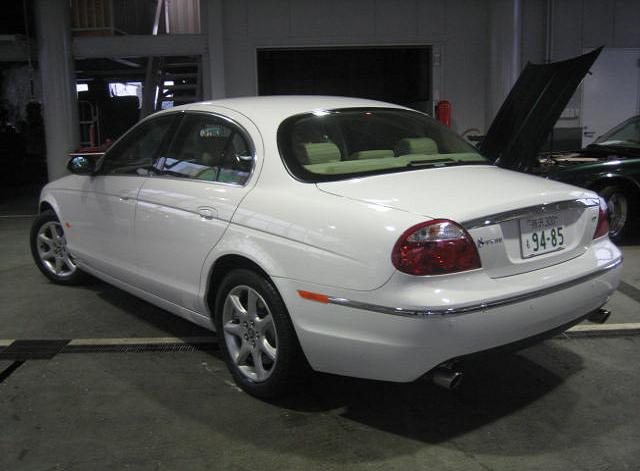
Jaguar S type 3.0V6

Sunday, November 19, 2006


Year system 2006 (2006)
Vehicle inspection 2008 November
Travel distance 250 Km
Color [howaitoonikisu]
Restoration history -

Option/equipment

Unused of super best car and current car
It is the car! This skin seat and seat heater, electricity
Dynamic seat, electromotive [chirutoteresukosutearin]
[gu] and genuine Nabi TV CD changer MD
The [ma] which still wears vinyl it is in state of the [ma]
It does! 3 annual free repair. Not to limit the car which is close to the new model car
Is. Please consult abundantly!! Quick person
It is the victory. In addition
There is a stock large number! The japanese nationwide delivery OK! Neighboring D
It takes over to [ra].
To http://www.jaguartokorozawa.jp/!!

Add to blogmarks delicious digg furl google netvouz newsvine reddit spurl Technorati


Nederlands/Dutch Français/French Русский/Russian Deutsch/German Italiano/Italian Português/Portuguese Español/Spanish Ελληνικά/Greek 日本語/Japanese 한국어/Korean 中文(简体)/Chinese Simplified 中文(简体)/Chinese Traditional
4:31 AM :: 0 comments ::

janangel :: permalink


The mercedes benz SL class


Daimler Chrysler Japan, administered large-scale minor change e.g., the new engine is introduced into roadster model “SL class” "of the Mercedes Benz" [be] land.

3.5 liter V6 engine of the new generation (installed capacity 272 horsepower) as for loading "SL 350". It combined with the mission "7G-TRONIC Sport" of the paddle shift attachment. 18 inch aluminum wheel and this leather seat and "the BOSE" corporation make sound system etc which renovate design are equipped.

On the one hand, 5.5 liter V8 engine (installed capacity 387 horsepower) it loads you line up also "SL 550" anew. Besides the fact that "SL 350" similar, "7G-TRONIC Sport" was adopted, suspension is controlled "ABC" (active body control) equipped finely in comparison with until recently compared to.

In addition, besides the fact that the front grille of new design, the bumper, the aluminum wheel and the rear combination lamp gathering image renovation was assured over all grade, design of the switches was modified even with interior, material feeling was raised.


Leading particular (SL 550)


Total length (mm) 4,540

Full-width (mm) 1,830

Total height (mm) 1,295

Wheel base (mm) 2,560

Vehicle weight (kg) 1,870

Engine type V8 DOHC

Total cubic displacement (cc) 5,461

The highest output (ps/rpm) 387/6,000

Largest torque (kg-m/rpm) 54.0/2,800-4,800

Fuel feeder Electrically controlled gasoline injection

Fuel tank capacity Unleaded premium 80

Main transmission type 7AT

10.15 Mode fuel economy 7.1

Add to blogmarks delicious digg furl google netvouz newsvine reddit spurl Technorati


Nederlands/Dutch Français/French Русский/Russian Deutsch/German Italiano/Italian Português/Portuguese Español/Spanish Ελληνικά/Greek 日本語/Japanese 한국어/Korean 中文(简体)/Chinese Simplified 中文(简体)/Chinese Traditional
4:21 AM :: 0 comments ::

janangel :: permalink


HONDA life


HONDA on the 28th, administered minor model change to car "life" lightly. It starts sale from October 5th.

Concerning all grade, renovating exterior design such as front bumper and headlight, rear combination lamp and door handle. Furthermore, with sporty grade "[deiba]", the aero forum bumper and the door mirror turn signal of new design, with "[deibatabo]" the front fog light was added.

In addition, in "F" "[deiba]" [kiyuriteiaramu] and the deodorization filter, the key less entry system standard was equipped, with the part grade, supports steering wheel operation the "smart parking assist system" option was set the occasion where it parks with the back.


Leading particular ([deiba] FF)


Total length (mm) 3,395

Full-width (mm) 1,475

Total height (mm) 1,580

Wheel base (mm) 2,420

Vehicle weight (kg) 870

Engine type Direct 3 SOHC

Total cubic displacement (cc) 658

The highest output (ps/rpm) 52/6,700

Largest torque (kg-m/rpm) 6.2/3,800

Fuel feeder HONDA PGM-FI

Fuel tank capacity Unleaded regular 35


Main transmission type 4AT
10.15 Mode fuel economy 19.0

Add to blogmarks delicious digg furl google netvouz newsvine reddit spurl Technorati


Nederlands/Dutch Français/French Русский/Russian Deutsch/German Italiano/Italian Português/Portuguese Español/Spanish Ελληνικά/Greek 日本語/Japanese 한국어/Korean 中文(简体)/Chinese Simplified 中文(简体)/Chinese Traditional
4:13 AM :: 0 comments ::

janangel :: permalink


The toyota o lith


Toyota sold the new model compact car “o lith” which it developed on the 23rd, as the Japanese and European strategic car.

The "o lith" finished while with the model which designs the exterior with the Toyota European design base, repeating the test with the public road and the circuit of European each country. It follows to Japan 2007 spring, refrains from the debut in Europe.

As for grade, "150X" of 1.5 liter engine loading (2WD/4WD), "180G" of 1.8 liter engine adoption of new development (2WD/4WD). Especially, flat as for 1.8 liter engine which has torque quality by the fact that timing of inhalation and the exhaust valve is controlled automatically according to operational circumstance, the point where fuel economy is pursued low feature. Each of them and in each case have combined with CVT where 7 fast sport sequential shifts are attached.

In the exterior, matching the front emblem only of the headlight and Toyota which it turns to the side attracts the attention. The interior, the European construction technique gathering, made effort for the advanced atmosphere making e.g., it unifies from the center cluster to the center console.


Leading particular (180G 2WD)


Total length (mm) 4,220

Full-width (mm) 1,760

Total height (mm) 1,515

Wheel base (mm) 2,600

Vehicle weight (kg) 1,260

Engine type Direct 4 DOHC

Total cubic displacement (cc) 1,797

The highest output (ps/rpm) 136/6,000

Largest torque (kg-m/rpm) 17.8/4,400

Fuel feeder EFI

Fuel tank capacity Unleaded regular 50

Main transmission type CVT

10.15 Mode fuel economy 16.8

Add to blogmarks delicious digg furl google netvouz newsvine reddit spurl Technorati


Nederlands/Dutch Français/French Русский/Russian Deutsch/German Italiano/Italian Português/Portuguese Español/Spanish Ελληνικά/Greek 日本語/Japanese 한국어/Korean 中文(简体)/Chinese Simplified 中文(简体)/Chinese Traditional
4:11 AM :: 0 comments ::

janangel :: permalink


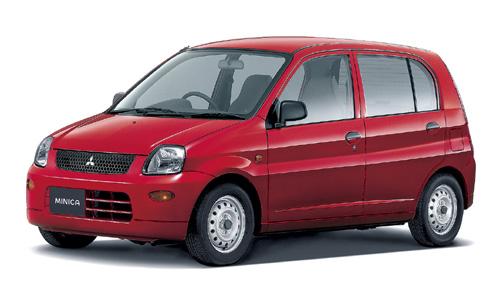
Mitsubishi [minika]


The mitsubishi automobile on the 17th, part modified the specification of car "[minika]" lightly.

It improved environmental efficiency e.g., by the fact that improvement of the catalyst is assured, "2005 exhaust standard 75% decrease level" (the 4 star) it achieves concerning all grade, furthermore it clears "2010 fuel economy standard +10%" "+20%" concerning the part grade.

In addition, seat cloth "of 5 door sedans Pc" was modified in knit cloth.


Leading particular (5 door sedans Voice 3AT)


Total length (mm) 3,395

Full-width (mm) 1,475

Total height (mm) 1,510

Wheel base (mm) 2,340

Vehicle weight (kg) 740

Engine type Direct 3 SOHC

Total cubic displacement (cc) 657

The highest output (ps/rpm) 50/6,500

Largest torque (kg-m/rpm) 6.3/4,000

Fuel feeder ECI-MULTI

Fuel tank capacity Unleaded regular 30

Main transmission type 3AT

10.15 Mode fuel economy 22.0

Add to blogmarks delicious digg furl google netvouz newsvine reddit spurl Technorati


Nederlands/Dutch Français/French Русский/Russian Deutsch/German Italiano/Italian Português/Portuguese Español/Spanish Ελληνικά/Greek 日本語/Japanese 한국어/Korean 中文(简体)/Chinese Simplified 中文(简体)/Chinese Traditional
4:08 AM :: 0 comments ::

janangel :: permalink


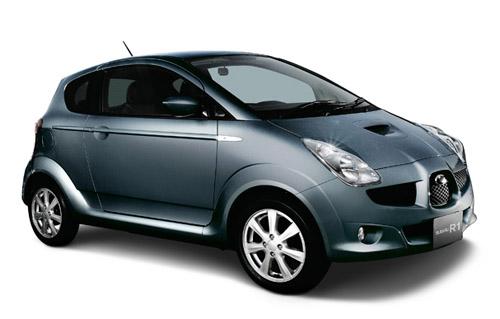
Subaru R1


The fuji Heavy Industries on the 16th, part modified the specification of car "Subaru R1" lightly.

Aiming toward the fact that environmental efficiency is raised, variable speed mechanism (CVT) the result and the fuel economy which renovate the design (10.15 modes) per 1 liters 0.5 kilometer rise, in the 2WD car it extended to 24.5 kilometers in comparison with former CVT.

On the one hand, besides the fact that the supercharger engine was made regular gasoline correspondence, new color it added "[dakugure] metallic" to the body color.


Leading particular (R 2WD)


Total length (mm) 3,285

Full-width (mm) 1,475

Total height (mm) 1,510

Wheel base (mm) 2,195

Vehicle weight (kg) 810

Engine type Direct 4 DOHC

Total cubic displacement (cc) 658

The highest output (ps/rpm) 54/6,400

Largest torque (kg-m/rpm) 6.4/4,400

Fuel feeder EGI

Fuel tank capacity Unleaded regular 30

Main transmission type CVT

10.15 Mode fuel economy 24.5

Add to blogmarks delicious digg furl google netvouz newsvine reddit spurl Technorati


Nederlands/Dutch Français/French Русский/Russian Deutsch/German Italiano/Italian Português/Portuguese Español/Spanish Ελληνικά/Greek 日本語/Japanese 한국어/Korean 中文(简体)/Chinese Simplified 中文(简体)/Chinese Traditional
3:57 AM :: 0 comments ::

janangel :: permalink


The Volkswagen Polo


The volkswagen group Japan on the 31st, added new grade "1.4 comfort lines" to line-up of compact car "polo".

Until recently, grade "1.4 4 doors" in the base, the case and the like of the garage inserting it informs about the distance to the obstacle of the rear with alarm, standard it equipped "rear park distance control". In addition, it renovated also steering wheel design, adopted sporty 3 these spoke types.

As for vehicle price in comparison with the based grade 45,000 Yen cheap 1,950,000 Yen.


Leading particular (1.4 comfort lines)


Total length (mm) 3,915

Full-width (mm) 1,665

Total height (mm) 1,480

Wheel base (mm) 2,470

Vehicle weight (kg) 1,160

Engine type Direct 4 DOHC

Total cubic displacement (cc) 1,389

The highest output (ps/rpm) 75/5,000

Largest torque (kg-m/rpm) 12.8/3,800

Fuel feeder Electronic fuel injection system

Fuel tank capacity Unleaded premium 45

Main transmission type 4AT

10.15 Mode fuel economy 14.4

Add to blogmarks delicious digg furl google netvouz newsvine reddit spurl Technorati


Nederlands/Dutch Français/French Русский/Russian Deutsch/German Italiano/Italian Português/Portuguese Español/Spanish Ελληνικά/Greek 日本語/Japanese 한국어/Korean 中文(简体)/Chinese Simplified 中文(简体)/Chinese Traditional
3:36 AM :: 0 comments ::

janangel :: permalink


Subaru R2 type S


The fuji Heavy Industries on the 16th, part modified the specification of car "R2" lightly.

Former variable speed mechanism (CVT) it took a second look, improved environmental efficiency. As a result, fuel economy (10.15 modes), per 1 liters 0.5 kilometers you improved, in the 2WD car you reached the point where 24.5 kilometers are marked.

In addition, after making the supercharger engine regular gasoline correspondence, new body color it added

"[dakugure] metallic".


Leading particular (R CVT AWD)


Total length (mm) 3,395

Full-width (mm) 1,475

Total height (mm) 1,520

Wheel base (mm) 2,360

Vehicle weight (kg) 860

Engine type Direct 4 DOHC

Total cubic displacement (cc) 658

The highest output (ps/rpm) 54/6,400

Largest torque (kg-m/rpm) 6.4/4,400

Fuel feeder EGI

Fuel tank capacity Unleaded regular 30

Main transmission type CVT

10.15 Mode fuel economy 22.5

Add to blogmarks delicious digg furl google netvouz newsvine reddit spurl Technorati


Nederlands/Dutch Français/French Русский/Russian Deutsch/German Italiano/Italian Português/Portuguese Español/Spanish Ελληνικά/Greek 日本語/Japanese 한국어/Korean 中文(简体)/Chinese Simplified 中文(简体)/Chinese Traditional
3:07 AM :: 0 comments ::

janangel :: permalink


Honda Accord / Mid-size Sedan / Best Cars 2006 form money.cnn.com

Friday, November 10, 2006


Honda Accord / Best Cars 2006 / Mid-size Sedan


part 1


The Honda Accord is an automobile manufactured by Honda. The Accord was introduced in 1976 as a compact hatchback, with styling similar to an upsized contemporary Honda Civic. A four-door sedan was debuted in 1977.

Honda Accord / Best Cars 2006 / Concept


Original plans for the Accord were to make it a mid-size car, along the lines of the Ford Mustang. The Accord was originally planned to be a V6-powered car with a long hood and sporty pretensions. Honda chose the name Accord, reflecting "Honda's desire for accord and harmony between people, society and the automobile."[1] The initial design was changed to a fuel efficient, low emission vehicle since it was introduced during the fuel crises of the 1970s. In the United States and Japan, a version was produced using Honda's CVCC technology, meeting emission standards of the 1970s and 1980s without a catalytic converter.

Like the smaller Honda Civic, the Accord used front-wheel drive and a transverse (sometimes called "East/West") engine layout.

The Accord became the first Japanese car to be produced in the US in 1982, when production commenced in Marysville, Ohio at Marysville Auto Plant.

It is also produced in Guangzhou, China by [Guangzhou Honda] since 1999.

Honda Accord / Best Cars 2006 / First generation (1976-1981)


The first generation Honda Accord was launched in 1976 as a two-door hatchback with 68 horsepower, a 93.7-inch wheelbase, and a weight of about 2,000 pounds. It was larger than the tiny Civic at 162 inches long. The Accord sold well, due to its moderate size and great fuel economy. In 1978 an LX version of the coupe was added which came with air conditioning. In 1979 a four-door sedan was added to the lineup, and horsepower went to 72 horsepower. In 1980 the optional two-speed automatic of previous years became a three-speed automatic. In 1981 an SE model was added for the first time, with leather seats.

Honda Accord / Best Cars 2006 / Second generation (1982-1985)


In 1982, the Accord was redesigned, and it became the best-selling Japanese nameplate in the US, holding that position for 15 years. Modernizing both the interior and exterior, the second generation Accord was mechanically very similar to the original, using the same 75hp, 1751cc EK1 CVCC engine. Fuel econoas increased by nearly 15%. Vastly improved quality control, however, made this one of the most reliable cars on the US market, a position it still holds today.
In 1983, Honda used a four speed automatic transmission in automatic models, a major improvement over the three speed Hondamatic.

By 1984 Accords sold in the eastern US were being produced at the new Marysville, Ohio plant with quality considered equal to those produced in Japan. The body was restyled with a slightly downward beveled nose, and the slightly more powerful ES2 1829cc CVCC powerplant was used, bringing 86hp. The LX offered velour upholstery, cassette stereo, air conditioning, power brakes & steering, power windows, power locks, powered sunroof and roof pillar antenna, along with thick black belt moldings and integrated bumpers. Flush plastic mock-alloy wheels covers instead of caps on steel wheels that resembled the trend-setting Audi 5000. Supplies were tight, as in the Eastern states, the wait was months for a graphite gray sedan, a then-popular color. These models are still common on US roads today.

In 1985 the luxury SE-i was added, which had leather seating, bronze tinted glass, and 14" alloy wheels, now common in top level trim cars. A fuel injected, 110hp non-cvcc A2OA1 made its debut. This 12 valve, 1955cc engine was the first non-CVCC engine used in an Accord. The same basic engine was used by Honda until 1989.

Honda Accord / Best Cars 2006 / Third generation (1986-1989)


The third generation Accord was introduced in Japan and Europe in 1985 and the rest of the world in 1986. The Accord had a very striking shape, and looked more akin to a sports car than a conventional 3-box sedan. It bore a resemblance to the second and third generation Prelude. One notable feature was the flip-up headlights, extremely unusual for a sedan. A fixed headlight version appeared in 1987 for European and Japanese markets. The fixed headlight version also had a different tailight cluster.

The 3rd Generation's suspension was a double wishbone setup, which was derived from Honda's work in Formula one. While this setup was more expensive than competitors' Macpherson Strut systems, it provided better stability and sharper handling. All 86-89 Accords Have front and rear stabilizer bars. The Accord's brakes were either Large 4-wheel discs with twin-piston calipers (as in the JDM Si model), smaller 4-wheel discs with single piston calipers, or a Front Disc/Rear Drum system. ABS was also available as an option on the 4-wheel disc brake models, although this was never offered in North American versions of the car. Base model Accords rode on 13-inch steel wheels with hubcaps, with more expensive models having the option of 14-inch alloy wheels.
The most recent addition to Honda's museum of used cars, a 1989, third generation, Honda Accord SEI owned by U.S. resident Jason Wong has survived through numerous crashes caused by blatantly bad driving, and has over 400,000 miles on it.

The Accord's interior ranged from spartan to luxurious. In the Japanese home market, The Accord was available with a full power package, Leather upholstery, heated seats, heated mirrors, a digital instrument cluster, and even climate control. The Accord Aerodeck (a three-door hatchback Accord made for Japanese and European consumers) had Recaro seats. Export Accords were not available with most of these options, presumably (and in the USA in particular) because Honda was seen as a builder of economy cars.
The Accord was available in several body styles throughout the world, including;

4 door sedan,
2 door coupe,
3 door hatchback and
3 door "Aerodeck", which resembles a station wagon

Source: http://en.wikipedia.org

Add to blogmarks delicious digg furl google netvouz newsvine reddit spurl Technorati


Nederlands/Dutch Français/French Русский/Russian Deutsch/German Italiano/Italian Português/Portuguese Español/Spanish Ελληνικά/Greek 日本語/Japanese 한국어/Korean 中文(简体)/Chinese Simplified 中文(简体)/Chinese Traditional
2:26 AM :: 0 comments ::

janangel :: permalink


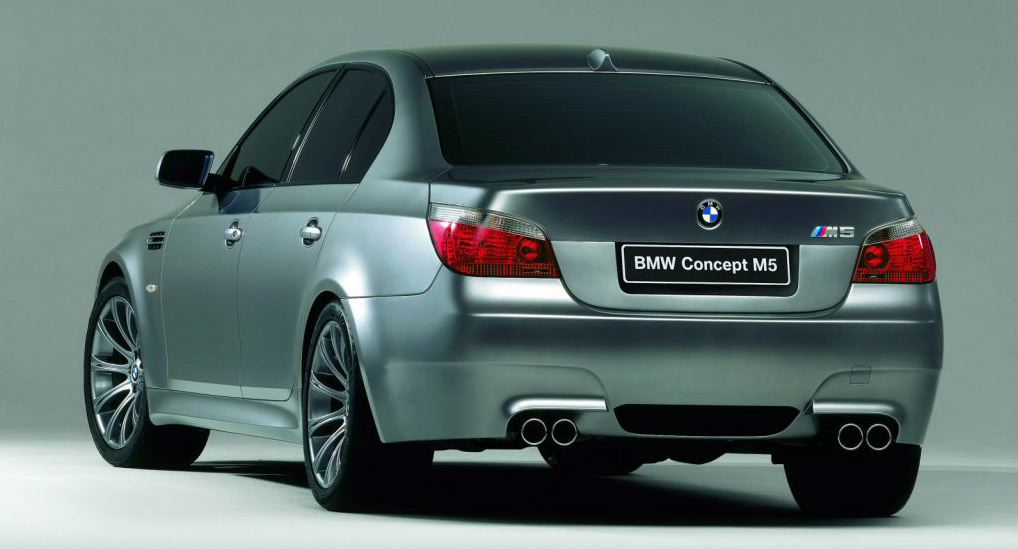
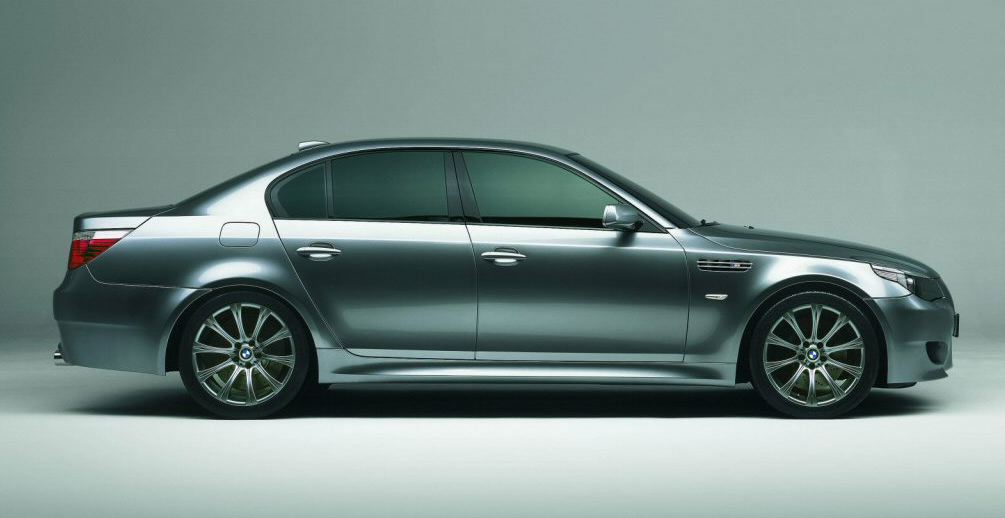
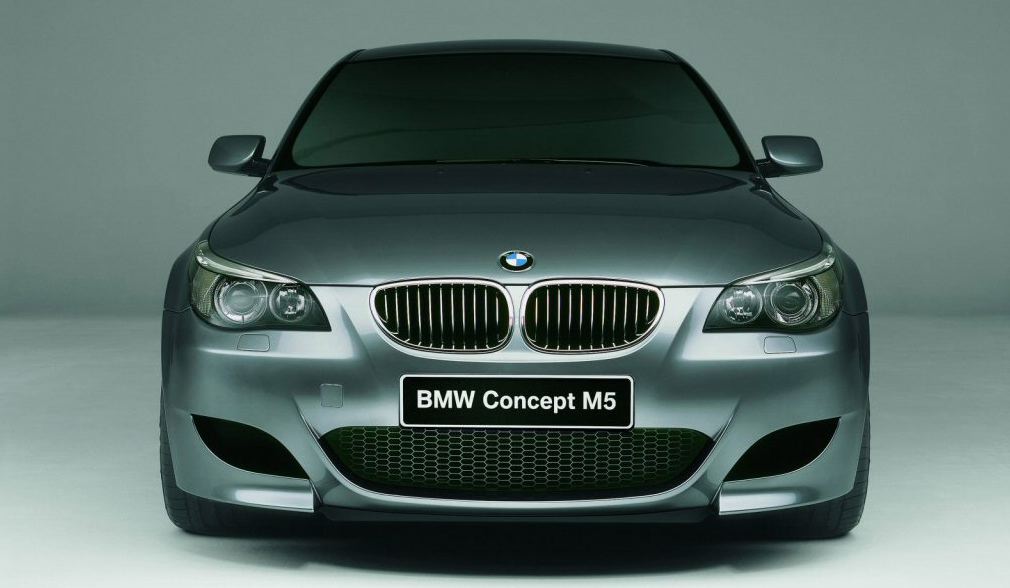
2006 BMW M5

Thursday, November 09, 2006


The 2006 BMW M5 is a 4-door, 5-passenger luxury sports sedan, available in one trim only, the Sedan.

Upon introduction, the M5 is equipped with a standard 5.0-liter, V10, 500-horsepower engine that achieves 12-mpg in the city and 18-mpg on the highway. A 7-speed manual transmission with overdrive is standard.

The 2006 BMW M5 is redesigned for 2006.

Source: yahoo

Add to blogmarks delicious digg furl google netvouz newsvine reddit spurl Technorati


Nederlands/Dutch Français/French Русский/Russian Deutsch/German Italiano/Italian Português/Portuguese Español/Spanish Ελληνικά/Greek 日本語/Japanese 한국어/Korean 中文(简体)/Chinese Simplified 中文(简体)/Chinese Traditional
3:52 AM :: 0 comments ::

janangel :: permalink


BMW M5


BMW M5


The BMW M5 is the high-performance version of the BMW 5-Series automobile made by BMW M GmbH. M5 versions of the E28, E34, E39 and E60 5-Series have been made.

BMW M5 / E28 M5 (1984-1987)


The first M5, based on the E28 5-Series, made its debut at the 1984 Amsterdam Motor Show. It was the product of demand for an automobile with the carrying capacity of a saloon (sedan), but the overall performance of a sports car. It utilized the 535i chassis and an evolution of the engine from the BMW M1. The M5 was handbuilt by Motorsport technicians and at its launch was the fastest production saloon (sedan) in the world.

The M5 was offered in four different versions. The first version was the Left Hand Drive (LHD) Euro Spec M5. The second version was the Right Hand Drive (RHD) Spec M5. The third version was the North American Spec (NA or so-called 1988) M5. The fourth version was the South African (ZA) Spec M5.

The LHD, RHD Euro Spec M5s and the ZA spec M5s had the M88/3 powerplant which delivered 286 hp DIN (210 kW) whereas the North American 1988 M5 was equipped with the S38 6-Cylinder engine that had a catalytic converter, which reduced the power output to 256 hp DIN (191 kW). The S38 differed from the M88/3 in that it had 9.8:1 compression versus the M88/3's 10.5:1. The S38 also used a dual-row timing chain where the M88/1 used a single-row chain. Initially 500 were to be made for the US Market, BMW later increased production to as many as 1,370 units for the US and Canadian Markets although the generally accepted figure is 1,244 units sold.

The NA Spec Models are unique in that technically there were all finished in Schwarz (Black) with Natur (Tan) interiors. The otherwise virtually identical Canadian-Spec M5s were also available with Black interiors as an option however a handful of US Models were also equipped with Black interiors.

US VINs range from 2791000-2792000 and 2875000-2875320 (Car # 2791000 is not known to have been built and not all VINs are known to have been used)

While every NA-Spec E28 M5 was a 1988 Model Year car, production of North American specification M5s commenced in November of 1986 and ended in November of 1987. Excepting 96 units that were assembled in kit form at BMW's Plant in Rosslyn, South Africa, all E28 M5s were assembled by hand at BMW Motorsport in Garching.

With a total production of 2,191 the E28 M5 remains the rarest regular production BMW Motorsport car.

BMW M5 / Specification


DC91: (LHD EURO) => M88/3 engine 286 hp (DIN) 588 Units produced

DC92: (RHD EURO) => M88/3 engine 286 hp (DIN) 187 Units produced

DC93: (LHD US) => S38B35 engine 256 hp (SAE) 1,320 Units produced

DC98: (RHD SA) => M88/3 engine 286 hp (DIN) 96 Units produced (DC98 and DC99)

DC99: (RHD SA) => M88/3 naucer engine 286 hp (DIN)

BMW M5 / Performance


At the time of sale, BMW quoted the following (relatively poor) 0-60 times to give the impression that the E28 M5 did not outperform the more expensive, heavier and top-of-the-range E24 M635csi.

(Euro) - 286 hp 0-60 mph - 6.2 s. Top Speed: 153 mph

(USA) - 256 hp 0-60 mph - 6.5 s. Top Speed: 148 mph

BMW M5 / Special versions


Whilst BMW Motorsport did not build any special versions of the E28 M5, the German tuner Hartge produced the Hartge H35S-24, a 330 PS (325 hp/243 kW) version of the E28 M5. Main modifications over and above the standard E28 M5 were revised cams, a modified exhaust, modified Motronic ECU programming and a revised (and lowered) suspension setup.

Alpina limited their tuning efforts to the older M30 engine powered models.

Alpina B7 Turbo 300-330hp (0-60: 4,7 sec, 168mph)


BMW M5 / E34 M5 (1988-1995)


The E34 M5 was produced from 1988 to 1995, although sales in North America started in 1991 and ended in 1993. It was produced at BMW M GmbH in Garching, Germany and like the previous M5, was entirely hand-built. It utilized the 535i chassis which was produced at BMW's Dingolfing plant. Assembly was done either by a single M employee or a team of M employees and generally took about two weeks. It is rumored that the test drivers of the E34 M5 could determine who or what team made each specific M5, due to characteristic quirks of the handbuilt nature of the E34 M5. The engines were also built by hand by BMW M technicians. All of the E34 M5 powerplants were built to 5% of advertised output.

The early E34 M5 used an evolution of the 24-valve I6 found in the E28 M5 and E24 M635CSi/M6. Designated S38B36, the engine technically remains a 3.5 L, with a bore of 93.4 mm and stroke of 86 mm for a total capacity of 3535 cc. The added stroke is due to a new forged steel crankshaft, though the camshafts were also changed. Compression was up slightly (10:1 versus 9.8:1). Other adjustments made included an electronically controlled butterfly valve in the intake plenum which provided better low rpm and mid-range power. The engine also featured an improved flywheel, Bosch Motronic fuel injection, equal length stainless steel headers and three way ceramic catalysts.

The E34 M5 had a highly-tuned I6 engine called the S38B36. Originally it had a displacement of 3.6 L and produced 315 hp (235 kW), and 266 lb·ft @ 4750 RPM. Cars sold in North America and Switzerland which, due to a different catalytic converter, produced 310 hp (229 kW).

In May 1992, the engine displacement was increased to 3.8 L with the S38B38, except in North America, which continued with the 3.6 L engine. Power was now increased to 340 hp (250 kW) SAE . Also in 1992, a Touring version was introduced in LHD form only.

The M5 came with an unusual wheel design. From 1988-1992 the M5 featured the M-System wheels. These wheels were 8x17J, but came with a bolted-on wheel cover. Under the cover was a black 5-spoke alloy wheel. The press was critical of the design, often claming it gave the M5 the appearance of having "white-wall" tires. In 1992 BMW changed the design and a new cover was produced – the M-System II. The original intent of the M-System cover was to direct more air to the brake assembly to increase cooling. The cover actually integrated a fin assembly behind the cover. The M-System II covers, known as the "throwing stars" did not have as much capability to direct air to the brake assemblies. In late 1994, the M5 came with M Parallel wheels that did away with the cover.

BMW M5 / Specification


HD91 (88-91 LHD Euro) I6-24v 3.6 L - 232 kW/315 hp (DIN) (only available with 5-speed manual transmission)

HD92 (89-91 RHD Euro) I6-24v 3.6 L - 232 kW/315 hp (DIN) (only available with 5-speed manual transmission)

HD93 (90-93 LHD US) I6-24v 3.6 L - 232 kW/310 hp (SAE) (only available with 5-speed manual transmission)

HC91 (92-94 LHD Euro) I6-24v 3.8 L - 250 kW/340 hp (SAE) (only available with 5-speed manual transmission)

HC91 (94-95 LHD Euro) I6-24v 3.8 L - 250 kW/340 hp (SAE) (only available with 6-speed manual transmission)

HC92 (92-94 RHD Euro) I6-24v 3.8 L - 250 kW/340 hp (SAE) (only available with 5-speed manual transmission)

HC92 (94-95 RHD Euro) I6-24v 3.8 L - 250 kW/340 hp (SAE) (only available with 6-speed manual transmission)

HJ91 (92-94 LHD Euro Touring) I6-24v 3.8 L - 250 kW/340 hp (SAE) (only available with 5-speed manual transmission)

HJ91 (94-95 LHD Euro Touring) I6-24v 3.8 L - 250 kW/340 hp (SAE) (only available with 6-speed manual transmission)
89-95 (ECE/GB/USA) - (no automatic transmission available)

BMW M5 / Performance


89-92 (Euro) I6-24v 3.6 L - 232 kW/315 hp 0-60 mph - 6.3 s. Top speed: 155 mph (electronic limited)

92-95 (Euro) I6-24v 3.8 L - 250 kW/340 hp 0-60 mph - 5.9/5.7 sec*. Top speed: 280 km/h (173 mph) (electronic limited) 295 km/h (183 mph) (without electronic limiter)

91-93 (USA) I6-24v 3.6 L - 229kW/311 hp 0-60 mph - 6.4 s. Top speed: 155 mph (electronic limited)

*(available only with 6-speed manual transmission)


BMW M5 / Special versions


Cecotto Edition — A total of 22 Cecotto E34 M5s were produced with options of having either Lagoon Green metallic (266) and Mauritius Blue metallic paint (287).

Winkelhock Edition — A total of 51 Winkelhock E34 M5s were produced with the options of having Jet Black (668) with contrasting lower body panels in Sterling Silver metallic paint (244).

20 Jahre Motorsport Edition — To celebrate BMW Motorsport 20th anniversary, BMW had built 20 specially equipped Euro-spec M5s in late 1992.

UK Limited Edition — To commemorate the end of right-hand drive E34 M5 production, 50 examples of the E34 M5 Limited Edition were assembled between March and June of 1995.

Elekta - 20 M5 Tourings were assembled for distribution in Italy. These were finished in either Sterling Silver over Marine Blue leather or British Racing Green over Tobacco leather. All were sold in 1995. It is debated as to whether or not these cars consitute a true special edition as they were ordered directly by a group of Italian BMW dealers.

Alpina B10 3.5 — with 254hp the 5-series could do 0-60 in 7.0 seconds and maximum of 157 mph (252km/h). There is only 572 of this Alpina ever produced.

Alpina B10 Bi-Turbo — With the 3.5l twin turbocharded I6 Alpina produced about 360hp and launch from 0-60 in 5.1 second and official speed of 181 mph (291km/h). With the 507 of Bi-turbo's this model is the rarest of all E34 production. This was also the fastest 4-door saloon(sedan) to 1996.

BMW M5 / E39 M5 (1998-2003)


Unlike its predecessors, the E39 M5 was not handbuilt at the BMW M GmbH factory; it was produced on the same assembly line as the normal E39 5-series at the Dingolfing factory in Germany.

Introduced in 1998 at the Geneva Motor Show, production did not begin until late October of that year. A total of 20,482 E39 M5s were made from 1998 to 2003. BMW M produced three versions of the E39 M5, the European LHD and RHD versions and the North American specification version.

The E39 M5 had a highly tuned V8 engine based on the M62 engine called the S62, which displaced 4.9 L and produced 394 bhp [US Spec] (294 kW). The engine featured a 7000 RPM redline, Double-VANOS, which varies the intake and exhaust valves for both cylinder banks, and individual throttle butterflies for each of the cylinders, allowing for a much faster engine response time.
All E39 M5s were equipped with a Getrag Type D six-speed manual transmission with the following gearing ratios:

4.23(1), 2.54(2), 1.62(3), 1.23(4), 1.00(5), 0.83(6)

It is the same transmission used in the E39 540i but some changes were made to cope with the extra power the S62 engine produced. A reinforced clutch, rear differential utilizing a shorter 3.15:1 ratio and a limited slip differential with 25% maximum locking.

The E39 M5 suspension shared its basic aluminium-intensive MacPherson strut/multi-link design of the V8 E39 5 series. However, several changes were made by BMW M. Reduced spring height, 0.9 inch (23 mm) lower. A specific shock valving, thicker front and rear anti-roll bars, polyurethane auxiliary springs and steel balljoints.

Like all V8-powered E39 models, the E39 M5 was equipped with a recirculating-ball steering system. Overall steering ratio was reduced to 14.7 from 17.9 it featured a servotronic vehicle-speed-sensitive power assist that provides two levels of resistance controlled via console mounted Sport button. The E39 M5 is equipped with four-wheel vented disc brakes measuring 13.6" in diameter in front and 12.9" in diameter in the rear. On European-specification models, the rotors are of a "floating" two-piece design for reduced risk of warping. Their lower unsprung weight improves ride quality and traction on bumpy surfaces as well. Anti-lock brakes were standard.

During its 5 years in production, there were some cosmetic changes, these include:

Revised headlight design incorporating illuminated "Angel Eye" rings

Jeweled Celis tail light design

Park Distance Control sensors in the front bumper (previously in rear only)

Thicker three-spoke M steering wheel identical to the one fitted to the E46 M3

Grey instrument panel

Improved solar sensor for standard automatic climate control

Revised navigation/audio unit with larger (6.5-inch) monitor

Rear head protection airbags added

Second-generation M Mobility tire repair system in place of earlier version

Available M Audio System with special tweeters, Kevlar/carbon coaxial speakers and two subwoofers behind the rear console

Alcantara headliner included with Extended Leather interior (previously only included with Complete Leather)

For the subsequent two model years, changes were limited to the addition of new exterior colors (from 9/01 production) and the upgrade to a DVD-based navigation system (from 9/02 production).

The E39 M5 is capable of accelerating from 0-62 mph in 4.9 seconds* and electronically limited to a top speed of 155 mph*, making it the fastest 4-door sedan in the world at that time.


BMW M5 / Trivia


The E39 M5 was almost not built at all. BMW believed that the 286 bhp 540i was powerful enough, but when Jaguar rolled out the XJR (320hp) and Mercedes-Benz the E55 (354hp), which had over 350 bhp, they responded to the competition with this 400 bhp midsize.

In 1998 BMW M5 E39 become the most powerful 4-door sedan in the world. The first Euro spec. version had 408hp.

BMW M5 / Specification


(Euro) 5.0 L V8-32 - 294 kW (400 hp) with catalytic converter

(USA) 5.0 L V8-32 - 290 kW (394bhp) with catalytic converter

BMW M5 / Performance


290 kW (394 hp) 0-60 mph - *4.9 s. Top Speed: 250 km/h (155 mph) (electronic limited), 298 km/h (186 mph) (without electronic limiter)

294 kW (400 hp) 0-100 km/h - *4.8 s. Top Speed: 250 km/h (155 mph) (electronic limited), 298 km/h (186 mph) (without electronic limiter)

BMW M5 / E60 M5 (2006-present)


The E60 M5 was introduced in 2006. It has a naturally aspirated 5.0 L BMW V10 S85 engine redlining at 8250 RPM and developing a peak output of 507 PS (373 kW, 500 SAE hp) with 383ft-lbs of torque. Other key features include a stiffened aluminum chassis and a 7-speed SMG III manual transmission.

The BMW M5, along with the new M6, were designed to use the new SMG III electrohydraulic manual transmission. Therefore, they will initially only be offered with this new transmission. There was a relative uproar amongst the fans and buyer-base when this was announced—however, BMW announced that 6-speed manual transmission will be available in the 2007 M5 for the North American markets.

The M5 features several F1 inspired engine and transmission controls including launch control, dynamic stability control, and the option of changing to either automatic or manual as well as the speed at which shifts are completed (there are 11 shift programs). Manual shifting can be done with either a floor shifter or the steering-column mounted shift paddles (another F1-inspired feature), both of which come in each M5. There is also a "power" button which, when switched off, limits the engine to only 400 bhp, intended for daily use. Switching it on unleashes the full 507 bhp for the Autobahn or track.

BMW M5 / Performance


0-60 mph: 4.2 s - Road and Track tested 0-60 in 4.1 seconds (February 2006 issue).

Top speed: 250 km/h (155 mph) (electronic limited), 330 km/h (206 mph) (electronic limited upgradable option), and 330+ km/h (206+ mph) (no electronic limiter)

Hovewer the BMW specification shows 4.7 seconds to 0-60 and maximum speed of 155mph.

Innovations: M Sport automobiles have a renowned tradition of offering blistering performance and the comfort of a luxury sedan (or "saloon" as it is termed in the UK). The new 2006-2007 M5 features some of BMW latest innovations in vehicle dynamics control systems such as EDC (electronic damper control), which constantly adjusts the suspension to environmental and vehicular conditions, and can also be set in 3 modes, comfort, normal and sport, all of which can be controlled by the driver. Further, the new M5 also features the VANOS variable valve timing system, and EMC (engine managment system) which sports the most powerful computer processor currently approved for automobiles, the MS S65 processor. This processor also controls and measures many other now 'standard' safety and performance systems such as the DSC (dynamic stability program), which incorporates traction control as well as various other mechanical and electronic systems.


Source: http://en.wikipedia.org

Add to blogmarks delicious digg furl google netvouz newsvine reddit spurl Technorati


Nederlands/Dutch Français/French Русский/Russian Deutsch/German Italiano/Italian Português/Portuguese Español/Spanish Ελληνικά/Greek 日本語/Japanese 한국어/Korean 中文(简体)/Chinese Simplified 中文(简体)/Chinese Traditional
3:30 AM :: 0 comments ::

janangel :: permalink


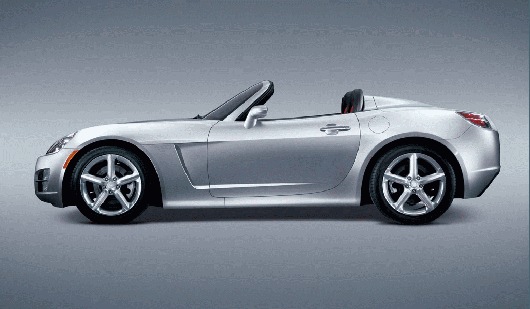
Saturn SKY


Saturn SKY


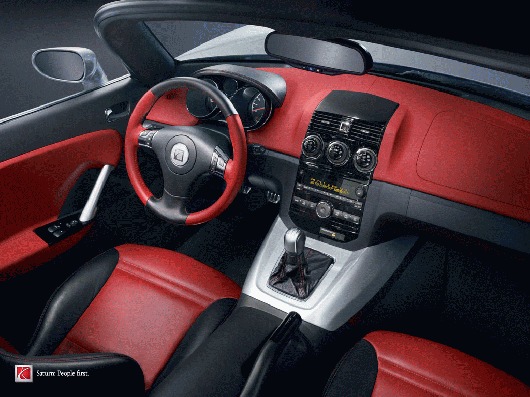
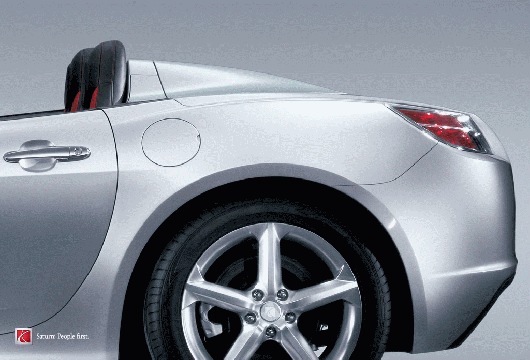
The Saturn Sky is a roadster released in the first quarter of 2006 as a 2007 model. It uses the Kappa automobile platform shared with the Pontiac Solstice. The Sky concept was shown at the 2005 North American International Auto Show, with the production version following at the 2006 show. It will be built at GM's Wilmington, Delaware plant, alongside the Solstice and the Opel GT. The Sky features 18 in (457 mm) wheels and a 2.4 L Ecotec LE5 I4 engine that produces 177 hp (132 kW) as well as a all-new I-4 2.0L Direct Injected Turbo-Charged engine that makes 230 hp. Manual and automatic transmissions are available, both with five gears.


The styling for the Sky, penned by Franz von Holzhausen, is based on the British Vauxhall VX Lightning design. It will be available in some European markets as the GT, and in Korea as the Daewoo G2X. The Solstice, Sky, and GT are built in Delaware; the G2X will be produced by GMDAT in Korea. The aggressive styling has garnered praise as a welcome departure from the typical, conservative "Saturn look".

The Sky is priced at US $23,690 (CA $31,665) with a five-speed manual transmission. A five-speed automatic will cost US $24,540.


Saturn SKY / Specifications


In the June 2006 issue of Car and Driver Magazine, a test of the 2007 Saturn Sky posted numbers that are respectable in the sports convertible market, but are not as quick as those of its Kappa sister, the Pontiac Solstice, or the Mazda MX-5.

0-60 mph (0-96 km/h): 7.3 seconds

0-100 mph (0-160 km/h): 21.9 seconds

5-60 mph (8-96 km/h): 7.7 seconds

1/4 mile: 15.9 seconds @ 88 mph (141 km/h)

Top speed (estimated by Car and Driver): 123 mph (197 km/h)

70-0 mph braking: 174 ft

300 ft skidpad: 0.86 g

EPA fuel economy: 20 mpg city/28 highway


Saturn SKY / Red Line


A Red Line model of the Sky was introduced on April 11, 2006 at the New York Auto Show. It uses the same 260 hp (194 kW) turbocharged Ecotec engine as the Solstice GXP, as well as the same standard 5-speed Aisin manual transmission. An automatic transmission is optional.

The Red Line will get a standard torque-sensing limitied-slip differential, standard StabiliTrak stability control, and an enhanced sport suspension over the standard Sky (currently available as a dealer-add on for regular Skys). Other exterior enhancements include dual exhausts, 18 in wheels, and a specific front fascia modeled for the Red Line. On the inside the Red Line will receive a special leather wrapped steering wheel with audio controls, special embroidery on the seats and floormats, metallic door sill covers and stainless steel pedals, special tachometer and gauges, and a digital boost gauge in the Driver Information Center.

Prices start $27,895 for the Red Line model, which will arrive in Saturn dealers in the fall of 2006.


Saturn SKY / Mallett V8 Conversion


Mallett Cars says it will offer a limited-production run of the Pontiac Solstice and Saturn Sky with V8 engines.

The company, an Ohio conversion firm that specializes in high-performance versions of the Chevrolet Corvette and Cadillac CTS-V, is customizing the roadsters with the LS2 V8, the most powerful standard small-block engine ever offered in the Corvette. The 6.0-liter V8 makes 400 horsepower and 400 pound-feet of torque.

Source: http://en.wikipedia.org

Add to blogmarks delicious digg furl google netvouz newsvine reddit spurl Technorati


Nederlands/Dutch Français/French Русский/Russian Deutsch/German Italiano/Italian Português/Portuguese Español/Spanish Ελληνικά/Greek 日本語/Japanese 한국어/Korean 中文(简体)/Chinese Simplified 中文(简体)/Chinese Traditional
3:06 AM :: 0 comments ::

janangel :: permalink


2007 Saturn SKY


The 2007 Saturn SKY is a 2-door, 2-passenger convertible sports car, available in two trims, the Roadster and the Red Line.

Upon introduction, the Roadster is equipped with a standard 2.4-liter, I4, 177-horsepower engine that achieves 20-mpg in the city and 28-mpg on the highway. The Red Line is equipped with a standard 2.0-liter, I4, 260-horsepower, turbo engine that achieves 22-mpg in the city and 31-mpg on the highway. A 5-speed manual transmission with overdrive is standard on both trims, and a 5-speed automatic transmission with overdrive is optional.

The 2007 Saturn SKY is all-new for 2007.

MSRP Range: $19,945 - $23,945

Source: yahoo

Add to blogmarks delicious digg furl google netvouz newsvine reddit spurl Technorati


Nederlands/Dutch Français/French Русский/Russian Deutsch/German Italiano/Italian Português/Portuguese Español/Spanish Ελληνικά/Greek 日本語/Japanese 한국어/Korean 中文(简体)/Chinese Simplified 中文(简体)/Chinese Traditional
2:52 AM :: 0 comments ::

janangel :: permalink


Five of the Best First Cars From Yahoo UK & IRELAND

Tuesday, November 07, 2006
1. Volkswagen Fox

2. Renault Clio Campus

3. Toyota Aygo

4. Fiat Panda

5. Daihatsu Charade

Add to blogmarks delicious digg furl google netvouz newsvine reddit spurl Technorati


Nederlands/Dutch Français/French Русский/Russian Deutsch/German Italiano/Italian Português/Portuguese Español/Spanish Ελληνικά/Greek 日本語/Japanese 한국어/Korean 中文(简体)/Chinese Simplified 中文(简体)/Chinese Traditional
4:25 AM :: 0 comments ::

janangel :: permalink


Daihatsu Charade Five of the Best First Cars From Yahoo UK & IRELAND


Daihatsu Charade


The Daihatsu Charade was a supermini sold from 1977 to 2000. Daihatsu considers the Charade a large "compact" car to differentiate it from other compacts in its lineup, such as the Daihatsu Mira/Cuore.

Daihatsu Charade / G10 (1977-1983)


The first generation (G10) appeared in 1977. It was available as 3-door or 5-door hatchback, powered only by a 993 cc 3-cylinder engine with 50 hp JIS (37 kW).

The early G10 (Series 1) had round headlight and the late G10 (Series 2) had square headlights.


Daihatsu Charade / G11 (1983-1987)


The second generation (G11) was released in 1983, again as a 3 or 5-door hatchback. It featured several variations of the 3-cylinder 1.0 L engine, including a turbocharged version with 68 hp JIS and a Diesel version. A 5-speed manual transmission was available. The G11 was produced with two frontends, coloquially known as "square-eyes" (Series 1) and "cat-eyes" (Series 2).

In Europe, the G11 underbody, engines and transmissions were used as the basis for the Innocenti De Tomaso, after Innocenti's contract with British Leyland expired. The G11 parts continued to be used by the Italian automaker until 1992.

Daihatsu Charade / G100 (1987-1994)


The third generation of the Daihatsu Charade (G100) debuted in 1987. It originally shipped with a 1.0 L 3-cylinder engine (CB23) and 1.3 L four-cylinder with single carburetor (HC-C). A 1.0 L turbo diesel, a 1.0 L twin-cam turbo (CB70)(CB80) , named GTti and delivering 105 hp JIS (77 kW), a 1.3 L fuel injected 4-cylinder (HC-E) and 3-cylinder (CB90) were later added. It was released in a 3-door and a 5-door hatchback. A 4-door sedan was released with the 1.3 L EFI engine in 1988. In Japan a deluxe version was available, dubbed GTxx, featured a sunroof, power windows, air-con and power steering.

The third-generation car was sold in the United States for just four years, from 1988 through 1992. The car sold poorly, perhaps because of its high price, poor sale sites, and unfortunate translation in English, and the company withdrew permanently from the US market. Sales for 1989 were 15,118.

Not all export markets were featured with all the bodywork variants (eg. Singapore received the 3-door hatch only, while Malaysia got the 5-door), but Europe received all three variants (with the sedan reserved for Central Europe).

In the Australian market the GTti was unavailable and the turbocharged petrol Charade used the carburettor engine (CB60/61) from the previous generation.


Daihatsu Charade / G102 (1989-1991)


Four door sedan Charade Social begun to sold in Japan since 1989. Next generation of this car in frame G203 and G213 was manufactured since 1994 to 1999 in 2 modifications: "pose" and "SX".

Daihatsu Charade / G200 (1994-2000)


The fourth generation was introduced in 1994, again with hatchback and sedan bodies. A 1.0 L engine was the base model in Japan, but in many European countries, the SOHC 1.3 L was used. The sedan, introduced in 1994, featured a 1.5 L engine with optional 4WD. The Diesel models were dropped in all markets where they were previously available.

The turbocharged GTti version was replaced by a more conventional GTi with an SOHC 16-valve 1.6 L engine. This version was engineered by Italian ex-racing driver De Tomaso (the previous owner of Innocenti), including racing-derived camshafts, and was capable of 124 hp JIS (91 kW) in the Japanese market. The export version was detuned to 105 hp DIN (77 kW). De Tomaso also added their own bodykit, Recaro seats, a Nardi Torino steering wheel, and Pirelli sports tyres. A total of 120,000 Charade GTi were produced following this joint effort.

The Charade was restyled in 1996, only two years after release (with the codename G203), with the 'smiley face' grille and changed headlights, looking more like it's Toyota sibling - the Starlet, and it was produced until 2000, when it was replaced by the Sirion/Storia.


Daihatsu Charade / Safety


In Australia, the Daihatsu Charade was assessed in the Used Car Safety Ratings 2006 as providing "significantly worse than average" protection for its occupants in the event of a crash.

Daihatsu Charade / Nameplate return


In 2005, the Charade name was resurrected in the UK and Australia. The new Charade is now a rebadged Daihatsu Mira (Cuore in other European markets), and it is positioned one market segment below its previous generations. It is available only as a 5-door hatchback with a 1.0 L engine.

Source: http://en.wikipedia.org

Add to blogmarks delicious digg furl google netvouz newsvine reddit spurl Technorati


Nederlands/Dutch Français/French Русский/Russian Deutsch/German Italiano/Italian Português/Portuguese Español/Spanish Ελληνικά/Greek 日本語/Japanese 한국어/Korean 中文(简体)/Chinese Simplified 中文(简体)/Chinese Traditional
4:14 AM :: 0 comments ::

janangel :: permalink


Fiat Panda Five of the Best First Cars From Yahoo UK & IRELAND


Fiat Panda


The Fiat Panda is a city car from the Italian automotive manufacturer Fiat. The first Fiat Panda was made from 1980 to 2003 with only few changes, and is now sometimes referred to as the "old Panda". The second model, launched in 2003, is sometimes referred to "new Panda" or "Nuova Panda" (in Italian), and was the European Car of the Year in 2004.

Fiat Panda / First generation (1980-1995)


Designed by Giorgetto Giugiaro, the Panda was intended as a modern day interpretation of the Citroën 2CV or Renault 4, being a basic, simple, no-frills utility vehicle that was easy to use and maintain. Introduced in 1980, the Panda was noted for its box-like styling, which would be developed two years later in the design of the supermini Uno. Mechanically, it borrowed heavily from the Fiat parts bin, using engines and transmissions from the Fiat 127 and in certain territories, the air-cooled 652 cc 2-cylinder powerplant from the Fiat 126 was also used. The theme of simplicity was also evident in the rear suspension, which used a dead axle suspended on leaf springs.

There were many features which contributed to the Panda's "utility car" role, for example, the rear seat could be folded flat to make a bed, or folded up to act as a bottle carrier, or removed altogether to increase the load space. The front seats had removable covers so that they could be washed, the fabric covered dashboard could also be removed, and the Panda could be specified with a full-length roll back canvas roof.

Fiat Panda / Four-wheel drive and further development


In 1983, a four-wheel drive system was developed, and this proved popular in rural Italy, where roads are often very poor. The improved "Panda Super", which featured a full mesh front grille with the new Fiat corporate "five bars" insignia was launched the same year.

1986 saw some major mechanical changes to the Panda, centering on the introduction of the FIRE engines from the Uno, and a new coil sprung rear axle to address the Panda's ride quality, which had come in for intense criticism from the press and customers alike for its harsh, bouncy nature. Visually identifiable by the lack of front "quarterlight" windows, this version was known as the Mark II, although this designation did not feature on the badging.


Fiat Panda / Final years


The car's popularity remained strong throughout the 1980s and early 1990s, despite often questionable build quality. Early cars also suffered from severe bodywork corrosion, like most Fiat vehicles from that era. From 1996 onwards, the Panda began to be phased out across Europe, being a victim of tightening safety legislation. The car remained in production in Italy until May 2000. 3 years later the new Panda was launched, with total production standing at over 4.5 million units over a 20 year period.

Fiat Panda / SEAT Panda/Marbella


Spanish automaker SEAT also produced a version of the Panda. Up to 1983, SEAT lacked their own designs and only made rebadged versions of Fiat cars through a licence agreement between the two firms. Thus, there existed a Spanish version of the Panda called the SEAT Panda, produced from 1981 to 1986. After Fiat sold their share in SEAT in 1983 and the licence agreement was over, the whole Fiat-based lineup of SEAT was quickly given the least possible changes so that Fiat couldn't sue SEAT on the basis of patent infringement. The SEAT Panda had its front and rear fascias redesigned and was marketed as the SEAT Marbella from 1987 to 1998. It did not receive the major mechanical upgrades of the 1986 Fiat Panda Mark II.

Fiat Panda / Second generation (2003-present)


The new Panda, codenamed Model 169 in its development phase, was originally intended to be called "Gingo". However, this name was considered to be too similar to the Renault Twingo, so Fiat decided to continue with the Panda name. Successor to the Seicento, the new model also effectively replaced the old Panda after 23 years of production, although the Seicento itself proved still popular and remained in production. Like the Fiat Seicento, the Panda is manufactured only in Tychy, Poland by Fiat Auto Poland. A smaller, 3-door Fiat will be added to the range in 2007, the new 500.

The high-bodied Panda takes clear styling cues from mini MPVs and mini SUVs, with its taillights in particular reminiscent of much larger cars from the likes of Volvo. The Panda won the European Car of the Year award in 2004.

The Panda includes an option for split rear seats, which makes the Panda a four-seater. Since September 2005, all Pandas are equipped with stability control, ABS, EBD and at least two front airbags. The gear-lever is located high on the central dashboard, which is designed to make changing gears more comfortable than with a conventional floor-mounted gearshift.

The financially troubled Fiat needed the new Panda to be a success, and indeed it was, selling half a million units by October 2005. It sells particularly well in Italy (over half of the cars produced are sold in Italy), being seen as closer to a spiritual successor to the Fiat 500 than a replacement for either the Seicento or the old Panda. The 500,000th new Panda was built on October 5, 2005, a light blue Panda Emotions with the 1.3 L diesel engine.


Fiat Panda / Official usage


The Panda is produced for police departments (the Polish police have bought some blue and white Panda Actual models), military agencies (the Italian Army uses several dark green Panda Climbing models), and forest services (the Italian forest service has dark green Panda Climbing models).

Fiat Panda / 2005 improvements


In September 2005 several changes were made to the 2003 model, including standard fitment of ABS and a front passenger's airbag.


Fiat Panda / Editions


The basic Actual has black bumpers, lacks electric windows and a full-size spare wheel. The Actual was introduced in January 2004.

The Active, introduced in May 2003, features body-coloured front bumpers, front electric windows, and central door locking. Radio, cassette/CD player, ABS, passenger's side airbag, power steering, and manual climate control are available as options. Since September 2005, ABS and the front passenger's airbag have been made standard.

The Active Plus edition is slightly better equipped than the Active, with a cassette/CD player as standard. Production of the Active Plus stopped in December 2003.

The Dynamic edition features ABS, dual airbags, roof bars, power steering and a cassette player as standard. A CD/MP3 player, CD changer, alloy wheels, manual or automated climate control, glass sunroof and a semi-automatic transmission are available as options. Since September 2005, four airbags have been standard in some countries, with an option for two additional side curtain airbags.

The Emotion (Eleganza) edition is the best-equipped trim level. This particular trim level features significant enhancements over the Dynamic, with a standard CD player, alloy wheels with low profile tyres and automated climate control. In some countries such as the UK, the Emotion is sold as the "Eleganza".

The 4/4 Climbing edition, introduced in December 2004, has a higher ride height and larger wheels and tyres than other editions. The four-wheel drive system also makes this edition slower than others. Features are similar to those found in the Dynamic. The Climbing, however, lacks a differential lock and transmission with reductor. The Climbing edition can be distinguished by a slightly higher suspension, additional black plastic overlays on the bumpers and a "Climbing" badge just below the "Panda" badge on the left side of the rear licence plate.

The 4/4 Cross edition, similar to the Climbing, features differently shaped front and rear lights and additional side cladding. Unlike the Climbing, the Cross does have a differential lock. The Cross edition became available in January 2006 in Italy, and will be available in September 2006 in Poland, over 9 months after its introduction in December 2005.


The Actual and Active are also bases for the Actual Van and Active Van, which can be used as small vans (they also have an additional safety net behind the front seats and removable rear seats). These versions can be identified by small "Van" label on the back door.

There were rumours about a Sporting edition, with differently shaped bumpers and two new stronger engines (rated at 75 bhp and 95 bhp). This edition was to be expected in the end of 2005 or in the beginning of 2006.

During the time, many limited editions of Panda (Active and Dynamic editions only) were produced. Each of them had additional interior fittings, differentiating them from the base model.

Fiat Panda / Engines


The smallest engine, the 1.1 L petrol SOHC FIRE engine, which is rated at 54 bhp and found in the Fiat Seicento, has been criticised for being underpowered for the Panda, which weighs over 850 kg, and the acceleration in particular was considered to be very slow. However, the engine reportedly gains flexibility and power with use.

The 1.3 L MultiJet diesel engine is rated at 75 bhp and 100 ft•lbf of torque; it is the most economical of all available engines. However, this engine is detuned from the Punto (where it develops 120 ft•lbf of torque) due to the Panda's weaker transmission. Pandas with diesel engines can be easily distinguished by a "MultiJet" badge on the right side of the rear licence plate.


Fiat Panda / Top speeds


150 km/h (93 mph) with 1.1 L petrol engine

155 km/h (96 mph) with 1.2 L petrol engine

160 km/h (99 mph) with 1.3 L diesel engine

Fiat Panda / New Fiat 500


The Panda platform will form a base for a retro reincarnation of the Fiat 500 developed in collaboration with Ford. The new 500 is scheduled to arrive in 2008.

Fiat Panda / Top Gear appearances


The Nuova Panda has appeared in the BBC programme Top Gear twice:

Panda Dynamic with the 1.2 L engine (aired on November 23, 2003), tested by James May

Panda Climbing with 1.3 L engine (aired on July, 10 2005), tested by Jeremy Clarkson.

The latter managed to get onto The Cool Wall.

Source: http://en.wikipedia.org

Add to blogmarks delicious digg furl google netvouz newsvine reddit spurl Technorati


Nederlands/Dutch Français/French Русский/Russian Deutsch/German Italiano/Italian Português/Portuguese Español/Spanish Ελληνικά/Greek 日本語/Japanese 한국어/Korean 中文(简体)/Chinese Simplified 中文(简体)/Chinese Traditional
3:29 AM :: 0 comments ::

janangel :: permalink


Toyota Aygo Five of the Best First Cars From Yahoo UK & IRELAND


Toyota Aygo


The Toyota Aygo (pronounced [ˈaɪ goʊ], Japanese katakana アイゴ) is a city car sold since 2005. All Aygos are built at the new factory of the TPCA joint-venture (Toyota Peugeot Citroen Automobile) in the city of Kolin, Czech Republic. The Aygo was first displayed at the 2005 Salon de l'Automobile de Genève.

The decision to make these cars was made on July 12, 2001, when the presidents of Toyota and PSA Group, Fujio Cho and Jean-Martin Folz respectively, decided to produce a small car to share development costs. The Peugeot 107 and Citroën C1 are rebadged versions of the same car.

The Aygo's starting price is €8,500 (£6,730 UK on the road price). The main difference between the Aygo and its siblings is in the interior equipment, badges, logos, etc. The planned production is 300,000 cars annually - 100,000 cars per brand. Sales began in July 2005 and the car is available as a three or five-door hatchback. There are two engines available, a 1.0 L three-cylinder engine rated at 68 bhp (), and a 1.4 L HDi diesel I4 engine rated at 54 bhp.

The Aygo and its siblings are deemed to be very safe (with a 4-star EuroNCAP rating) and comfortable, and their fuel consumption is lower than average.


Toyota Aygo / Specfications


Wheelbase: 2340 mm

Length: 3405 mm

Height: 1465 mm

Dry weight: 790 kg (1741.65 lb)

Curb weight: 890 kg (1962.11 lb)

Turning circle: 9.46 m (31.03 ft)

Independent front suspension with coil springs, semi-independent torsion beam rear suspension with coil springs


Toyota Aygo / Trivia


The name "Aygo" comes from "i-go",[1] symbolising freedom and mobility.[2]

The Aygo was awarded the Car of the Year award for 2005 from Top Gear magazine, alongside the £840,000, 253-mph Bugatti Veyron supercar.

The Aygo was featured in two episodes of the British motoring programme Top Gear: in the first, two teams of five Aygos each, piloted by presenters James May and Richard Hammond and various professional racing drivers, played a game of "car football", using the cars to push a giant inflatable ball, about the size of the Aygo, into goals; in the second, the stunt was repeated with one team of Aygos and one team of the new Volkswagen Fox.

The Aygo currently sponsors programmes on T4 on Channel 4


Source: http://en.wikipedia.org

Add to blogmarks delicious digg furl google netvouz newsvine reddit spurl Technorati


Nederlands/Dutch Français/French Русский/Russian Deutsch/German Italiano/Italian Português/Portuguese Español/Spanish Ελληνικά/Greek 日本語/Japanese 한국어/Korean 中文(简体)/Chinese Simplified 中文(简体)/Chinese Traditional
2:26 AM :: 0 comments ::

janangel :: permalink


Renault Clio Campus Five of the Best First Cars From Yahoo UK & IRELAND


Renault Clio


The Renault Clio is a supermini/subcompact produced by the French automaker Renault. Originally launched in 1990, it is currently in its third generation. The Clio has seen substantial critical and commercial success, being consistently one of Europe's top-selling cars since its launch, and it is largely credited with restoring Renault's reputation and stature after a difficult second half of the 1980s.

The Clio has been sold as the Renault Lutecia in Japan. A four-door sedan was developed for certain markets where sedans are traditionally preferred over hatchbacks and was sold under names Renault Clio Symbol, Renault Clio Sedan and Renault Thalia. It is also sold under the Nissan nameplate in some Latin American markets as the Nissan Platina with slight changes in the front of the car.

Renault Clio Campus / Clio (1990-1998)


The Clio was introduced at the Paris Motor Show in the autumn of 1990 and began sales in France soon after, although sales in the rest of Europe did not begin until March 1991. The Clio largely replaced the Renault 5 (which continued to be built until 1996 as a budget alternative).

The engine range available at launch included 1.2 L and 1.4 L E-type "Energy" gasoline I4 engines (first seen in the R19) and 1.7 L and a 1.9 L diesel (both based on the F-type unit) engines. The gasoline engines all received a fuel injection system in place of carburettors in 1992, in order to conform to new pollutant emission regulations.

A minor trim facelift occurred after only a year of being on sale. A new "smooth" version of the Renault diamond badge (the previous "ribbed" badge was being phased out at the time) and a new front seat design were the only changes. The altered design did not constitute a new 'phase'. In

March 1994 the Phase 2 model was launched, with small updates to the exterior and interior of the Clio. Most noticeable was the change in the front grille from two metal ribs to a single colour-coded slat grille. The bump strips were made slightly larger and rounder, and the car's trim level badge was incorporated into the bump strips. The badges on the tailgate strip were moved up onto the tailgate itself and the tailgate strip was given a carbon fibre look. The rear light clusters were given a slightly more rounded 'bubble' shape to them, giving the Clio a more modern look. The clusters, however, are physically interchangeable with Phase 1 clusters.

In 1996, with the arrival of the Phase 3 'facelift' Clio, the 1.2 L Energy engine was replaced by the 1149 cc D7F MPi (Multi Point Injection) 'DiET' engine, first used in the Renault Twingo; for some time also, versions were available with the older 1239 cc "Cléon" unit from the original Twingo. The cylinder head design on the 1.4 L E-Types was also slightly altered for the Phase 3 models in a bid for better fuel economy. This resulted in the engines producing slightly less power than their earlier versions.

The Phase 3 Clios had a slightly more noticeable update than the Phase 2's. The Phase 3 has different, more rounded headlights, incorporating the turn signal in the unit with the headlight. The bonnet curved more around the edges of the lights. The tailgate incorporated a third brake light and a new script "Clio" name badge, following the same typeface as contemporary Renaults. Some mechanical improvements were also made.

During 1991 a 1.8 L 16-valve engine producing 137 hp (also first seen in the R19) capable of propelling the car to 125 mph was introduced to the Clio engine range. This was simply called 'Clio 16v'. As well as having better performance than a regular Clio, the 16v sported wider plastic front bumpers, an offset bonnet vent, wider rear bumpers and uprated suspension and brakes, and colour-coded front mirrors and bumpers.

Renault also released a "warm-hatch" version of the Clio. It was aesthetically very similar to the Clio RT, but with the addition of a 110 hp 1.8 L 8-valve engine, side skirts and disc brakes on all wheels. This was badged as the 'RSi'.

The Clio was voted 1991 European Car of the Year, and the Clio immediately became one of Europe's best-selling cars, as well as the first Renault to be consistently among the top-10 best sellers in the United Kingdom. UK sales were helped by a famous television advertising campaign by Publicis shot in France, featuring the two main characters of Nicole (played by Estelle Skornik, who ironically was not French nor did she have a driving licence at the time) and Papa.

Renault Clio Campus / Clio Williams


In 1993, the Clio Williams was launched (with a limited run of just 400 right hand drive cars in the UK), named after the then Renault-powered Formula One team WilliamsF1. Contrary to expectations, Williams had nothing to do with the design or engineering of this Clio; the modifications to the Clio 16v on which it was based were the work of Renault Sport - Renault's motorsport division. It had a 2.0 L 16-valve I4 engine rated at 110 kW (150 bhp DIN) and a top speed of more than 217 km/h (135 mph), with performance-tuned ride and handling. Renault later released the Williams 2 and Williams 3 special editions, much to the chagrin of those owners who had been assured of the exclusivity of the "original" Williams. The differences between the three versions of the Williams were largely a reflection of phase changes across the Clio range e.g. the gradual addition of enhanced safety features and cosmetic variations. Other than this, the Williams 1 and 2 had no sunroof and were painted in 449 Sports Blue. The final Williams 3 was painted in a slightly brighter shade of blue and finally gained a sunroof which had long been standard on virtually all previous Clios. The original Williams was the lightest of the three, lacking the electrics necessary for the sunroof or the mirrors but was the only one to sport a metal plaque stating the build number (out of 400). However, the rarest model was actually the Willams 3 with official Renault figures in the UK putting it at well below the 400 original cars and therefore more 'limited edition'. Respected motoring journalists consistently rate the Williams as one of the very best 'hot hatches' ever made, regardless of era.


Trim levels

RN (1.2, 1.4 petrol, 1.9 diesel)

RT (1.2, 1.4, 1.8 petrol, 1.9 diesel)

S (1.4 petrol)

Baccara (1.4, 1.8 petrol)

RSi (1.8 petrol)

16V (1.8 16V petrol)

Williams (2.0 16V petrol)

From 1991 to 1994 the United Kingdom and Europe versions were similar. From 1994 to 1998, the trim levels were individual to the specific European country of sale.

Renault Clio Campus / Clio II (1998-2001)


The all-new second generation of the Clio was launched in the spring of 1998, with considerably more rounded and bulbous styling than its predecessor. Part of the radical concept of the new Clio were many components made of unusual materials to save in weight and repair costs. For instance, the front fenders were made of plastic and the material of the hood was aluminium in some versions. Originally the engine lineup was similar to before, with 1.2 L, 1.4 L and 1.6 L gasoline engines and a 1.9 L diesel. In early 1999, a sportive 16V version equipped with a new 1.6 L 16-valve engine was introduced, and eventually, all the older gasoline engines were upgraded to more powerful and more economical 16-valve versions.

In 1999, Renault launched the 172 hp Clio RS (short for Renault Sport), named Clio Renault Sport 172, with a 2.0 L 16-valve engine and a top speed of 220 km/h (137 mph). But in this form, the car is capable of surprisingly good handling and performance. The top-of-the-range Clio however was the exotic mid-engined, rear-wheel drive Clio V6 Renault Sport, which placed a 166 kW (230 hp) 3.0 L V6 engine sourced from the Renault Laguna behind the front seats, with a top speed of 235 km/h (146 mph).

Renault Clio Campus / Clio II facelift (2001-present)


A facelift in the spring of 2001 saw the exterior restyled, the interior quality improved and a 1.5 L direct-injection diesel engine added. The Clio 172 was also facelifted and a lightened more focused version was also added to the range, known as the 172 Cup. The 172 later received a further upgrade to 182 bhp, becoming the Renaultsport Clio 182, the Clio 182 Cup, and finally a top-of-the-range ultimate version called the Clio 182 Trophy. The Trophy has been heralded as one of the best hot hatches of all time and won 'Evo' magazine's People's Performance Car of The Year, 2005, beating rivals such as the Lamborghini Gallardo and other exotica in the process. Only 500 were made for the UK (and a handful for Switzerland). The main difference between the Trophy and the normal 182 and 182 Cup is the race-engineered suspension that affords the Trophy handling unparalled in its market. Renault also produced the Clio v6, which looks like its on steroids compared to the 182, the V6 has a 255bhp 24v 3.0 liter enginer with a 0 - 62.5 speed of 5.8sec and a top speed of 153mph. Renault decided to keep selling the Clio II until 2008; the Clio II is sold alongside with the Clio III; but with a smaller price and known as the Clio Campus. In 2006 this model was facelifted with a restyled front and rear. The number plate moves from boot (or trunk) to bumper.

Renault Clio Campus / Clio Symbol/Clio Sedan/Thalia (2001-present)


In 2001 Renault launched the sedan version of the Clio II, named Clio Symbol (Turkey, Romania and Bulgaria), Thalia (the rest of Eastern Europe) or Clio Sedan (Southern Cone). Originally, the car was intended for sale in developing countries, but due to demand, it was later made available in countries where sedans were traditionally preferred over hatchbacks, most notably Spain and a few countries in Eastern Europe. In Eastern Europe, the Thalia is cheaper than the Clio, but is still about 30% more expensive than the Dacia Logan, which is also sold by Renault in that market but s a low cost model. In a few markets where Renault was not present, the sedan was offered as the Nissan Platina (manufactured and sold in Mexico at a Renault-Nissan factory and sold throughout Central America), with two exceptions being Chile and the Dominican Republic, where both the Nissan and Renault models are present.

Renault Clio Campus / Clio III (2005-present)


An all-new third generation Clio was unveiled in 2005. It uses a platform co-developed with Nissan (which Renault has a share in) that is shared with the Renault Modus and the current Nissan Micra. It is considerably larger and 130 kg heavier as well as more expensive than the Clio II, the result of a decision to move the Clio slightly upmarket. The outgoing Clio II will continue to be sold as a budget option until the launch of the new Renault Twingo (expected 2007). The new Clio achieved a 5-star EuroNCAP safety rating, joining the rest of Renault's family of top-rated consumer motors - with the exception of the Kangoo - which all have the maximum safety rating. Sales of the 3-door model begun throughout Europe in October 2005, with a 5-door model to follow in early 2006.

In June 2006 the sales of the third generation Clio Renault Sport started in France for the price of 23000 euros. Clio Renault Sport is equipped with a new naturally aspirated 16-valve 2 liter engine based on the earlier version used in the second generation Clio Renault Sport and a 6-speed gearbox. The engine develops 145 kW (197 hp) at 7250 rpm. The top speed is 215 km/h and 0-100 km/h takes 6.9 seconds.

Renault exhibited a Hi-Flex Clio with a 1.6 L 16-valve engine at the 2006 Paris International Agricultural Show. This vehicle, which addresses the Brazilian market, features Renault-developed flex-fuel technology, with a highly versatile engine that can run on fuel containing a blend of gasoline and ethanol in any proportion (0% to 100% of either)

Renault Clio Campus / Engines


1.0 L (999 cc) 8-valve I4; 58 bhp (43 kW); top speed: 144 km/h; 0-100 km/h: 18.2 s (Brazil 2002-2005)
1.2 L (1149 cc) 8-valve I4; 60 bhp (43 kW); top speed: 160 km/h; 0-100 km/h: 13.5 s (1996-1998)
1.2 L (1149 cc) 8-valve I4; 60 bhp (43 kW); top speed: 160 km/h; 0-100 km/h: 15.0 s (1998-2000)
1.2 L (1149 cc) 8-valve I4; 65 bhp (48 kW); top speed: 157 km/h; 0-100 km/h: 14.9 s (2005-present)
1.2 L (1149 cc) 16-valve I4; 75 bhp (55 kW); top speed: 170 km/h; 0-100 km/h: 13.0 s (2001-present)
1.2 L (1149 cc) 16-valve I4; 75 bhp (55 kW); top speed: 170 km/h; 0-100 km/h: 13.0 s (2002-present)
1.2 L (1171 cc) 8-valve I4; 60 bhp (44 kW); top speed: 155 km/h; 0-100 km/h: 15.2 s (1990-1995)
1.2 L (1239 cc) 8-valve I4; 54 bhp (40 kW); top speed: 150 km/h; 0-100 km/h: 14.5 s (1995-1996)
1.4 L (1390 cc) 8-valve I4; 80 bhp (59 kW); top speed: 175 km/h; 0-100 km/h: 11.2 s
1.4 L (1390 cc) 8-valve I4; 75 bhp (55 kW); top speed: 170 km/h; 0-100 km/h: 12.0 s (1998-2001)
1.4 L (1390 cc) 16-valve I4; 98 bhp (72 kW); top speed: 185 km/h; 0-100 km/h: 10.0 s (1998-present)
1.5 L (1461 cc) 8-valve diesel I4; 65 bhp (48 kW); top speed: 162 km/h; 0-100 km/h: 15.0 s (2001-present)
1.5 L (1461 cc) 8-valve diesel I4; 68 bhp (50 kW); top speed: 162 km/h; 0-100 km/h: 15.2 s (2005-present)
1.5 L (1461 cc) 8-valve diesel I4; 80 bhp (59 kW); top speed: 175 km/h; 0-100 km/h: 12.2 s (2002-present)
1.5 L (1461 cc) 8-valve diesel I4; 86 bhp (63 kW); top speed: 174 km/h; 0-100 km/h: 12.7 s (2001-present)
1.5 L (1461 cc) 8-valve diesel I4; 100 bhp (73 kW); top speed: 185 km/h; 0-100 km/h: 10.6 s (2003-present)
1.5 L (1461 cc) 8-valve diesel I4; 106 bhp (78 kW); top speed: 190 km/h; 0-100 km/h: 11.1 s (2001-present)
1.6 L (1565 cc) 8-valve I4; 74 bhp (53 kW); top speed: 170 km/h; 0-100 km/h: 13.5 s (1996-2005)
1.6 L (1598 cc) 16-valve I4; 88 bhp (65 kW); top speed: 177 km/h; 0-100 km/h: 11.9 s (2005-present)
1.6 L (1598 cc) 16-valve I4; 110 bhp (81 kW); top speed: 194 km/h; 0-100 km/h: 9.6 s (1998-present)
1.6 L (1598 cc) 16-valve I4; 112 bhp(81 kW); top speed: 190 km/h; 0-100 km/h: 10.2 s (1998-present)
1.7 L (1698 cc) 8-valve diesel I4 (1990-1991)
1.8 L (1794 cc) 8-valve I4; 95 bhp (70 kW); top speed: 185 km/h; 0-100 km/h: 9.9 s (1990-1998)
1.8 L (1794 cc) 8-valve I4; 110 bhp (81 kW); top speed: 195 km/h; 0-100 km/h: 8.9 s (RSi)
1.8 L (1764 cc) 16-valve I4; 137 bhp (101 kW); top speed: 209 km/h; 0-100 km/h: 8.0 s (16S)
1.9 L (1870 cc) 8-valve diesel I4; 65 bhp (48 kW); top speed: 161 km/h; 0-100 km/h: 14.8 s (Clio I, Clio II)
1.9 L (1870 cc) 16-valve turbodiesel I4; 80 bhp (59 kW); top speed: 175 km/h; 0-100 km/h: 13.0 s (Clio II)
2.0 L (1998 cc) 16-valve I4; 150 bhp (110 kW); top speed: 215 km/h; 0-100 km/h: 7.8 s (16S Williams)
2.0 L (1998 cc) 16-valve I4; 172 bhp (126 kW); top speed: 220 km/h; 0-100 km/h: 7.2 s (2000-2004 RS)
2.0 L (1998 cc) 16-valve I4; 182 bhp (133 kW); top speed: 222 km/h; 0-100 km/h: 7.1 s (2004-2006 RS)
2.0 L (1998 cc) 16-valve I4; 197 bhp (145 kW); top speed: 220 km/h; 0-100 km/h: 7.2 s (2006-present RS)
3.0 L (2946 cc) 24-valve V6; 230 bhp (166 kW); top speed: 235 km/h; 0-100 km/h: 6.4 s (
3.0 L (2946 cc) 24-valve V6; 255 bhp (187 kW); top speed: 245 km/h; 0-100 km/h: 5.8 s (2000-present RS)

Renault Clio Campus / Advertising


In the United Kingdom, the Clio was advertised on television using the characters "Nicole" (a flirtatious young French woman played by Estelle Skornik) and "Papa" (her somewhat slow-witted father played by Max Douchin). The commercials were very popular and in one of the series actually featured Bob Mortimer and Vic Reeves. In 2000, the 1991 commercial "Interesting" was named the 12th best television commercial of all time, in a poll conducted by The Sunday Times and Channel 4.

The Clio II advertising campaign featured French international footballer Thierry Henry attempting to define the term va-va-voom, a term later defined by the Oxford English Dictionary as "The quality of being exciting, vigorous, or sexually attractive", although they state that it dates from the 1950s.

The current campaign for the new Clio features French actress Annelise Hesme and English actor Jeremy Sheffield trying to outdo each other over the superiority of each nation via a range of cultural aspects. This "France Vs England" - French Car, British Designers - campaign has been extended across a number of media, for example the French Film, British Cinemas tag for the annual Renault French Film Festival.

Renault Clio Campus / Trivia


The Clio was the third Renault car since 1962 to be called with a non-numeric name (after the Renault Espace and the Renault Fuego). If the 1960's Renault Rambler - an AMC model built and sold in Europe under the Renault brand - is included, that puts the Renault Clio in fourth position.

In the British film Love Actually, the character Jamie crashes his Saab 900 into a silver 2002 Clio.

Hot hatch versions include the Williams, RS, RS Team, RS Trophy and RS Clio V6.

The RS Clio V6 is featured in the game Need for Speed: Most Wanted, as well as on Forza Motorsport, Project Gotham Racing 2 and Gran Turismo 4, where the Clio RS 182 is also featured.

Renault Clio Campus / Awards


Winner Best European Car in 1991.

Winner Best European Car in 2006.

Winner of El Mejor Automóvil Subcompacto from Automóvil Panamericano magazine in 2002,2003 and 2004 in Mexico.

Source: http://en.wikipedia.org

Add to blogmarks delicious digg furl google netvouz newsvine reddit spurl Technorati


Nederlands/Dutch Français/French Русский/Russian Deutsch/German Italiano/Italian Português/Portuguese Español/Spanish Ελληνικά/Greek 日本語/Japanese 한국어/Korean 中文(简体)/Chinese Simplified 中文(简体)/Chinese Traditional
1:52 AM :: 0 comments ::

janangel :: permalink


Volkswagen Fox Five of the Best First Cars From Yahoo UK & IRELAND


Volkswagen Fox


The Volkswagen Fox is a supermini produced and designed by Volkswagen do Brasil and exported to Latin America and Europe.

In South America, it fits between its two supermini brothers, the low-cost Gol and the Polo. Despite its height (1545 m), inner room is quite similar to its competitors Chevrolet Corsa, Fiat Palio, Ford Fiesta, Renault Clio and Peugeot 206.
In Mexico it is called the Lupo due to the current Mexican President Vicente Fox having the last name of Fox. It was introduced to the European market in 2005, replacing the ageing Lupo city car as the entry-level car in the lineup and at a far cheaper price.
Currently the Fox is produced as a 3-door and 5-door hatchback. There is also a mini SUV version called CrossFox and a mini MPV model called Suran', SpaceFox or Sportvan depending on the market.

Volkswagen Fox / Volkswagen CrossFox


The Volkswagen CrossFox is a mini SUV with a rugged off-road design which sets it apart from the standard Fox. It is only available with front-wheel drive.

It is produced in Brazil and sold in Latin American markets; there are plans to export it to European markets to compete in the expanding mini SUV market (see Ford EcoSport, Fiat Sedici/Suzuki SX4, Daihatsu Terios).

Volkswagen Fox / Volkswagen Suran/SpaceFox/SportVan


A mini MPV/station wagon crossover version was presented in April 2006, and was named Suran in Argentina and SpaceFox in Brazil and SportVan in Mexico. It is built in General Pacheco, Argentina.

Because of its 40cm-extended tail (4165 mm vs. 3805 mm), it has a larger boot and more rear leg room. Its main competitors are the Peugeot 206 SW, Fiat Idea and Chevrolet Meriva.

Volkswagen Fox / Facts


The roof liner and rear parcel shelf are made from the renewable resourced Curaua plant.

The Fox has a four-star EuroNCAP safety rating.

The static torsional stiffness of the Fox is 17.941 Nm and has a dynamic torsional stiffness of 39.2 Hz.

An optional rear bench seat slides 15 centimetres lengthways and the backrest can split 50/50 in the middle, depending on the configuration, the boot volume is adjustable between 260 and 1,016 litres.

South American spec Fox 1.6 8V Specifications

Engine: 1599 cm³

Power: 101 hp (74 kW) @ 5750 rpm

0-100 km/h: 10.5 s

Top Speed: 170 km/h

Torque: 140 Nm @ 3250 rpm

Boot: 260-1236 litre

Manual transmision, 5 gears. (Audi MQ200 manual gearbox)

Fuel capacity: 50 litre


Volkswagen Fox / In Europe


The Fox was introduced to Europe at the AMI Leipzig Motor Show in 2005, on debut in Europe the Fox was only available as a three-door hatchback and with three engine options: the 1.2 L 40 kW (55 hp) and 1.4 L 55 kW (75 hp) petrol engines and the 1.4 L 51 kW (69 hp) TDI engine.

The Fox was sold with a long options list to reduce its tag price, therefore letting the European customer specify the Fox to their liking. It did come with standard twin airbags and anti-lock braking system for safety measures. Upon its debut the Fox scored four stars in EuroNCAP's crash rating system proving that small cars can be safe.

Options

Alloy Wheels

Electronic packs with Electric Windows and Mirrors

Sunroof

ESP with Electronc Differential Lock and Traction
Control System

Side Airbags

Semi Climatic Air Conditioner

CD Player

Volkswagen Fox / North American Fox


Fox and Fox Wagon was also the name of a subcompact sedan and station wagon sold by Volkswagen in North America as an entry level model. It was a USDM version of the Gol range, produced in the late 1980s and early 1990s in Brazil. It was a design unique to South America, although it bore a family resemblance to the Volkswagen Jetta. After 1990 the Wagon was discontinued from the North American market; it was the last two-door wagon offered in the US. However, the Fox sedan and coupe lasted until 1993 in the US. Early models (1987-1989) feature Bosch Jetronic mechanical fuel injection and a squared off front end with rectangular sealed beam halogen headlamps, while the final U.S. version (1990-1993) had Bosch Digifant electronic fuel injection and a more modern styled front end with plastic headlamps

Volkswagen Fox / Other Volkswagens labelled Fox


In South Africa, the Volkswagen Fox was a model based on the original Jetta, but featuring the front end of the Citi, the Citi is a facelifted version of the original Golf Mk 1 & is still in production in South Africa.

In Australia during the 1970s, the Audi 80, assembled locally by Volkswagen Australasia Ltd, was badged as the Audi Fox.

Source: http://en.wikipedia.org

Add to blogmarks delicious digg furl google netvouz newsvine reddit spurl Technorati


Nederlands/Dutch Français/French Русский/Russian Deutsch/German Italiano/Italian Português/Portuguese Español/Spanish Ελληνικά/Greek 日本語/Japanese 한국어/Korean 中文(简体)/Chinese Simplified 中文(简体)/Chinese Traditional
1:40 AM :: 0 comments ::

janangel :: permalink